
What If Your Attic Has Vermiculite Insulation?
See how to spot vermiculite insulation, why it may involve asbestos, and what to do next. Learn what not to do until it’s identified and tested by the right pros.
The first time I saw vermiculite in an attic, I thought, “Huh. Somebody dumped a bag of aquarium gravel up here.” It had that pebbly, sparkly look, and it sat loose between the joists like a layer of cereal. Then the homeowner mentioned the word asbestos, and the whole job switched from “top it off and air seal” to “hands off until we know what this is.”
If you opened your attic hatch and found a layer of weird gray pebbles, you are in the right place. This guide will help you recognize vermiculite, understand the asbestos testing question, and know what not to do until it’s identified.
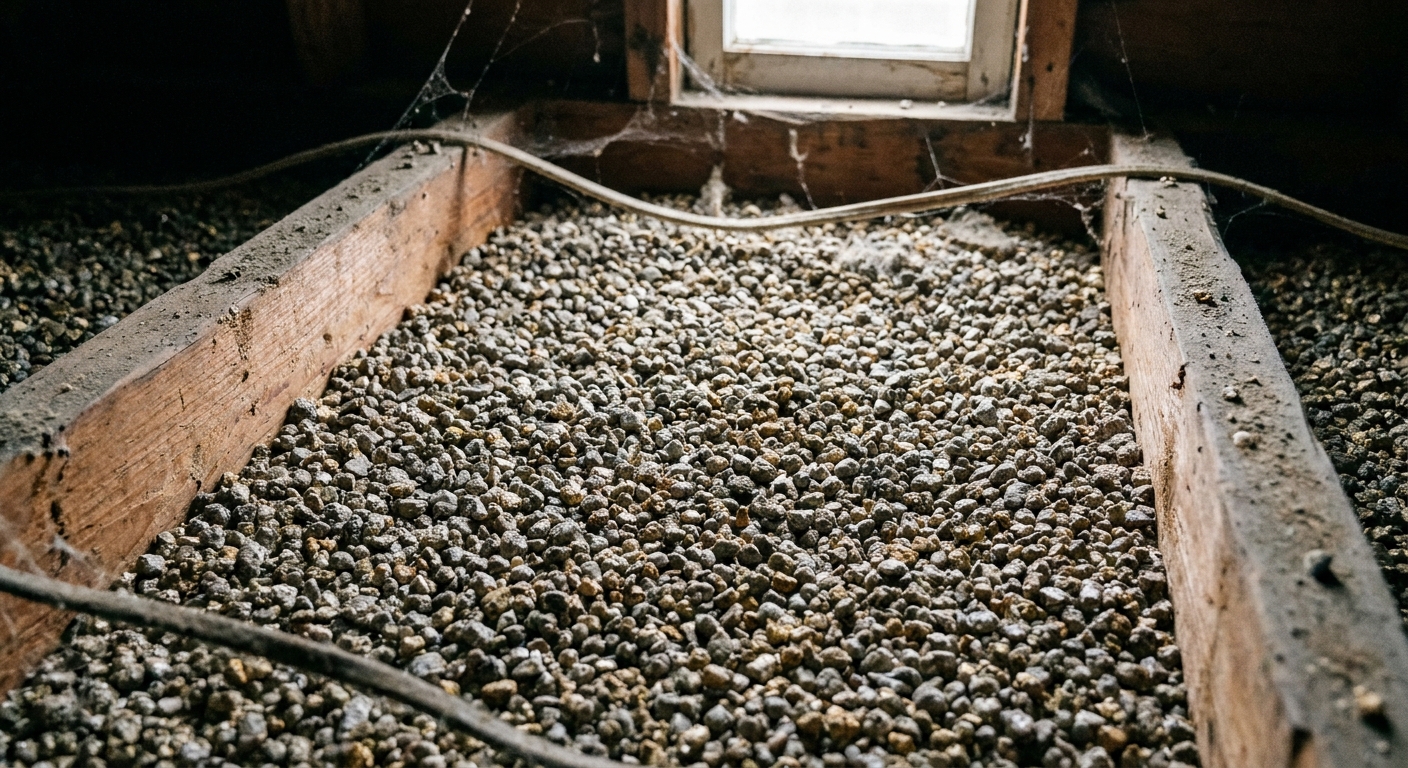
What vermiculite insulation looks like
Vermiculite is a mineral that was used as loose-fill attic insulation for decades. It has a pretty distinct look once you know what to look for.
Common visual clues
- Pebble-like granules instead of fluffy fibers. Pieces are often 1/8 inch to 1/2 inch across.
- Gray, silver, tan, or brown tones. Many batches look gray-brown with shiny flecks.
- Sparkly or reflective when a flashlight hits it.
- Loose and pourable, like lightweight gravel or kitty litter, not matted like fiberglass batts.
- Often found in older homes (mid-century and earlier), sometimes underneath newer insulation someone added later.
There are other loose-fill products, so don’t treat appearance as a diagnosis. The goal here is simply to recognize a possible vermiculite situation so you don’t accidentally stir it up.
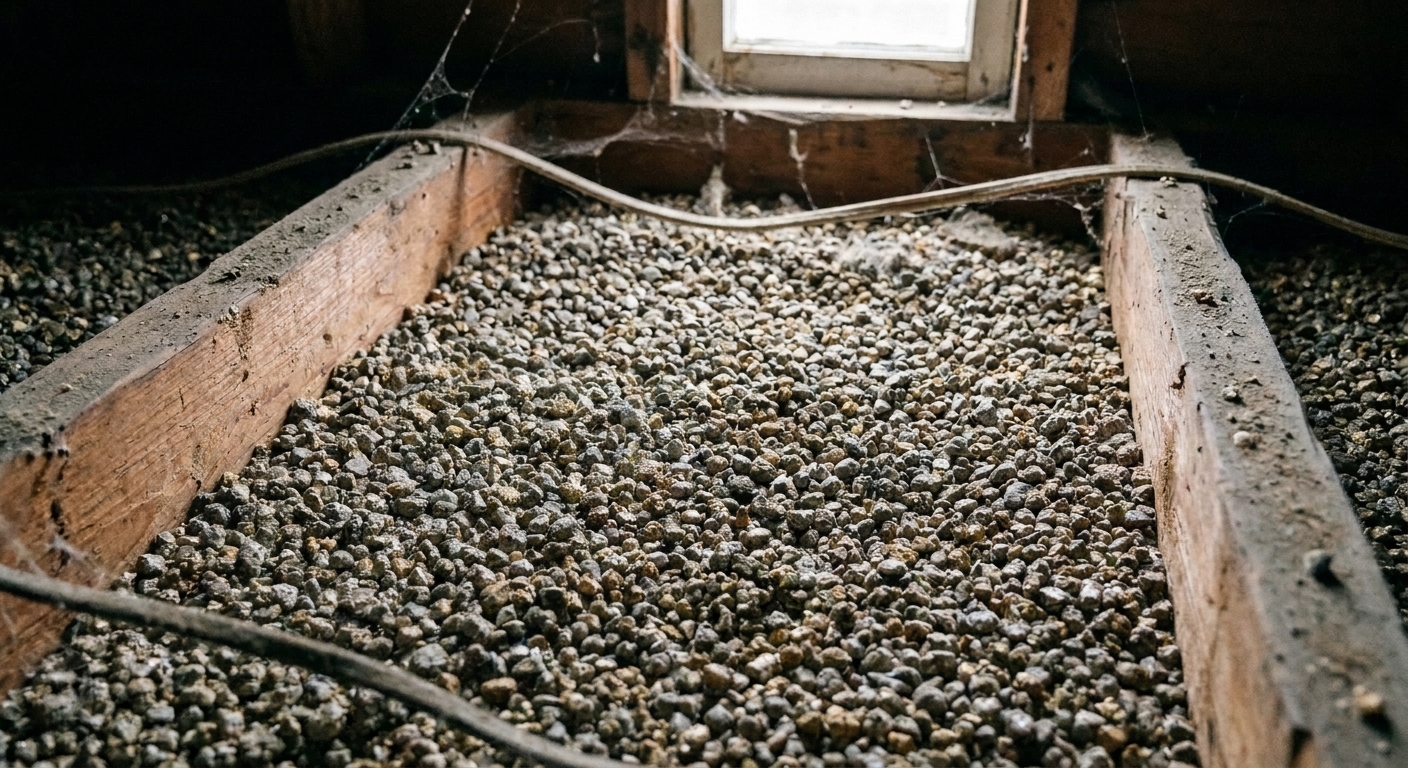
Why vermiculite raises the asbestos question
Some vermiculite insulation is associated with asbestos contamination, depending on where and when it was mined and processed. Not every attic with vermiculite contains asbestos, but the problem is you cannot confirm safety by eyeballing it.
Big takeaway: If you suspect vermiculite, treat it as if it could contain asbestos until a qualified lab test says otherwise.
Asbestos is most dangerous when tiny fibers become airborne and get breathed in. That’s why actions that kick up dust, like sweeping, shop-vacuuming, or blowing insulation around, are the wrong next step when the material is unknown.
What not to do (seriously) until it’s identified
This is the part where my inner carpenter has to put the tools down and be the boring adult. If you suspect vermiculite:
Do not vacuum it
A regular shop vac will not protect you. It can exhaust fine particles back into the air and spread dust into your house. Even many consumer HEPA vacs are not meant for asbestos abatement work practices.
Do not sweep, rake, or bag it up
Anything that breaks it apart, stirs it up, or makes dust increases risk.
Do not “top it off” yet
I know, you just want a warmer house. But adding insulation over questionable material can:
- Make future testing or removal more complicated.
- Encourage more crawling around up there, which disturbs the material.
- Bury electrical boxes or knob-and-tube wiring hazards, if present in older homes.
Do not use a leaf blower, attic fan, or negative-pressure DIY setup
That kind of airflow can move fibers around if asbestos is present. Abatement work is about containment and controlled procedures, not “blast it out.”
If you already disturbed it: Stop work, leave the attic, and avoid tracking dust through the house. Close the hatch or attic door. If you have HVAC returns near the attic access, avoid running the system until you’ve talked with a qualified professional about next steps.
So what should you do right now?
If you see pebble-like insulation that could be vermiculite, the safest plan is simple: limit disturbance and get it identified properly.
Step 1: Back out and limit traffic
- Keep kids and pets away from the attic access.
- Avoid storing boxes up there or walking through it.
- Do not move it “just a little” to peek at wiring or recessed lights.
Step 2: Take a couple of photos from the hatch
You can often get decent pictures without climbing into the attic. A clear phone photo helps when you call around for guidance.
Step 3: Decide who you’re calling
You have two common routes:
- An asbestos inspection/testing company (often a licensed asbestos inspector) that can collect a sample using proper precautions and send it to an accredited lab.
- An asbestos abatement contractor who can evaluate, test (depending on local rules), and discuss options if removal is needed.
In many areas, the person who tests and the person who removes are separate by design. The goal is unbiased results and proper documentation. When you start calling, ask whether they are licensed for asbestos inspection in your state and what lab they use.
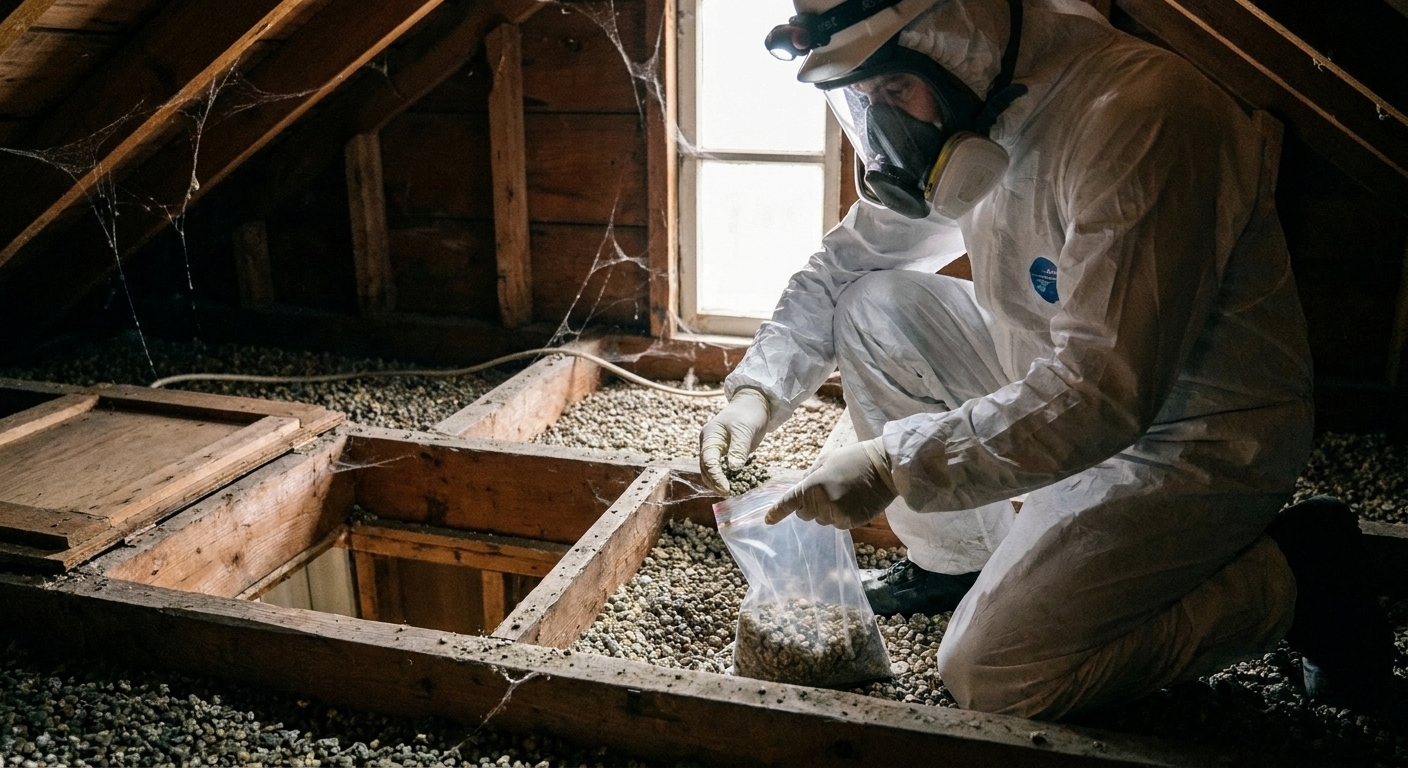
Can you test vermiculite yourself?
Homeowners can sometimes submit samples to a lab, but sampling is the risky part. The act of collecting the material is when it is easiest to release dust. If you are not trained and equipped to do it safely, hiring a pro is usually money well spent.
Why pros are worth it here
- They know how to minimize disturbance and dust.
- They use appropriate protective gear and containment practices.
- They can collect a representative sample, which matters for accuracy.
- You get paperwork that is useful for remodeling, selling the home, or planning abatement.
If you are determined to pursue testing, call a local asbestos inspection company first and ask for their recommendation. In plenty of cases, they will strongly prefer to collect the sample themselves. That is a good sign they take safety seriously.
If it is vermiculite, what are your options?
Once you have results, the next move depends on what you are planning to do with the attic.
Option A: Leave it undisturbed (common)
If the material is in place, dry, and you are not doing work that requires disturbing it, the safest approach can be simply leaving it alone. The key is keeping it undisturbed and not using the attic as storage.
Option B: Professional abatement (removal)
If you need to do major work up there (rewiring, HVAC runs, bathroom fan ducts, recessed lighting fixes), or if testing confirms asbestos and the insulation is going to be disturbed, professional abatement is the route. Abatement contractors handle containment, filtration, disposal rules, and clearance steps that DIY methods just cannot replicate.
Option C: Encapsulation or covering (only with expert guidance)
In some situations, pros may recommend a method that effectively locks material in place. This is not the same thing as a homeowner tossing fiberglass over the top. Do not bury vermiculite until you have clear direction based on your local rules, your attic conditions, and your test results.
What if it is not vermiculite?
If your attic insulation turns out to be ordinary fiberglass (pink, yellow, or white fluffy fibers) or cellulose (gray, shredded-paper look), that’s a different story. Those materials are commonly topped off as part of an energy upgrade, assuming they are dry, mold-free, and not covering active hazards.
If that’s what you have, head over to our guide on adding insulation over existing attic insulation and follow the top-off steps for depth, even coverage, and ventilation clearance.
Quick FAQ
Is vermiculite always asbestos?
No. But some vermiculite insulation can contain asbestos, and you cannot confirm safety by appearance alone. Testing is how you move from “maybe” to “know.”
Can I just wear a respirator and remove it myself?
I get the impulse. I’m a DIY guy too. But asbestos work is about more than a mask. It’s containment, dust control, disposal requirements, and doing it without contaminating your home. For suspected asbestos insulation, DIY removal is a high-risk move.
What if it’s buried under fiberglass batts already?
Still treat it as potentially asbestos-containing. The worst thing you can do is start pulling batts up and shaking dust loose without a plan. Talk to an asbestos professional about how to handle testing and next steps.
What if I need to run a wire or fix a bathroom fan duct?
That’s exactly the kind of project that can disturb insulation. If you suspect vermiculite, pause and get it evaluated first. It can change the safest and most cost-effective plan.
My rule of thumb
If your attic insulation looks like sparkly little pebbles, treat it like a “stop sign,” not a Saturday project. Don’t vacuum it, don’t sweep it, and don’t top it off until you know what you’re dealing with.
Once you’ve got identification and test results from the right professional, you can make a clear plan and get back to the normal DIY fun stuff, like sealing air leaks and adding insulation you can actually feel good about.