
Can You Cover Knob-and-Tube Wiring with Insulation?
Knob-and-tube wiring and attic insulation can be a risky mix. Learn how to spot K&T, why covering active wiring is often flagged, and what to do before insulating.
The first time I ran into knob-and-tube wiring in an attic, I was a young carpenter helping a homeowner air-seal before blowing in insulation. Everything was going great until my flashlight caught a ceramic knob nailed to a joist and a cloth-covered wire stretched across open air like a tiny clothesline. We stopped right there, and that pause probably prevented a very expensive mistake.
If you are wondering whether you can cover knob-and-tube wiring with insulation, the safest general answer is: do not cover it unless you have confirmed it is fully abandoned and safe to cover. In a lot of jurisdictions, weatherization programs and inspectors will flag active knob-and-tube if it is buried because it was designed to shed heat in free air and because the wiring can be compromised with age. Rules vary, so treat this as a stop-and-verify moment, not a loophole hunt.
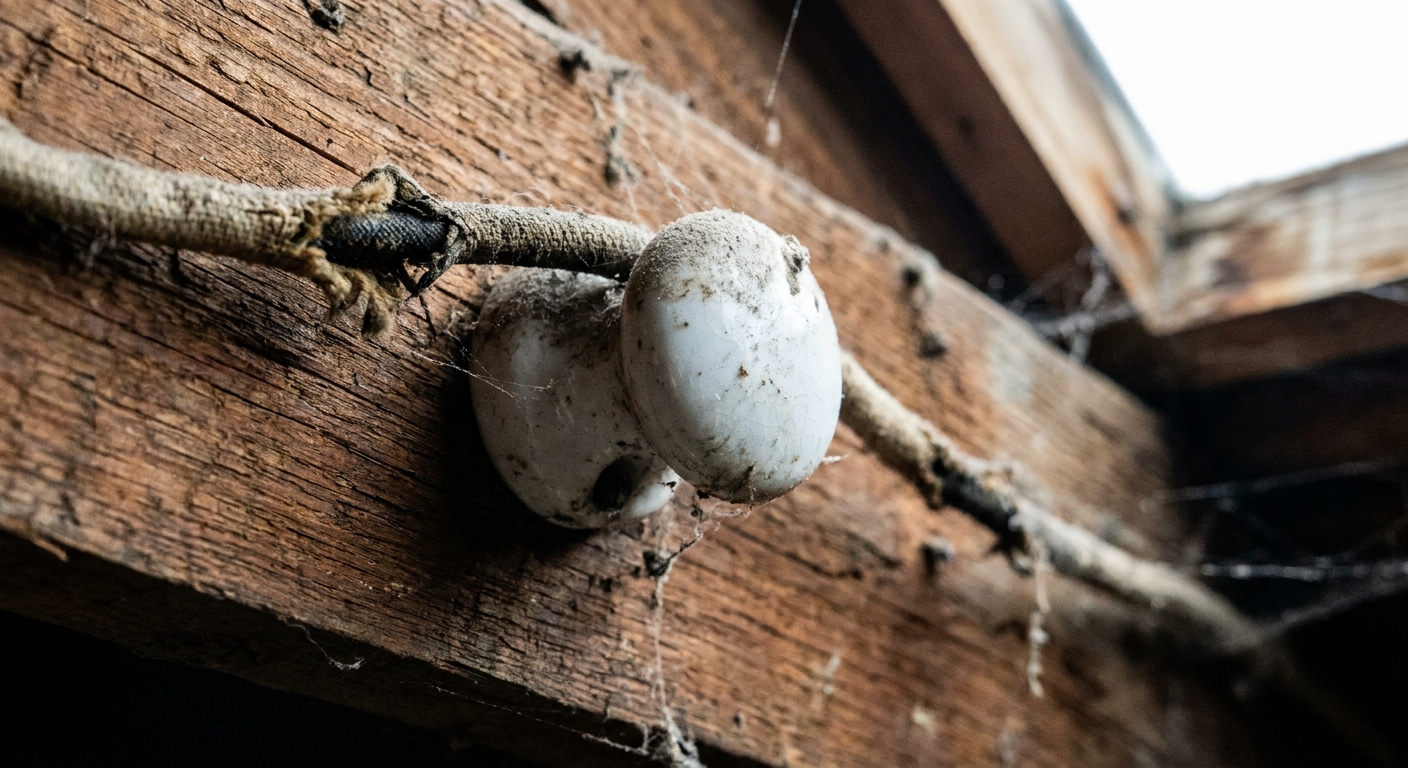
What knob-and-tube looks like
Knob-and-tube, often found in homes built roughly from the late 1800s through the 1930s, is pretty distinctive once you know what you are looking for.
Common visual clues
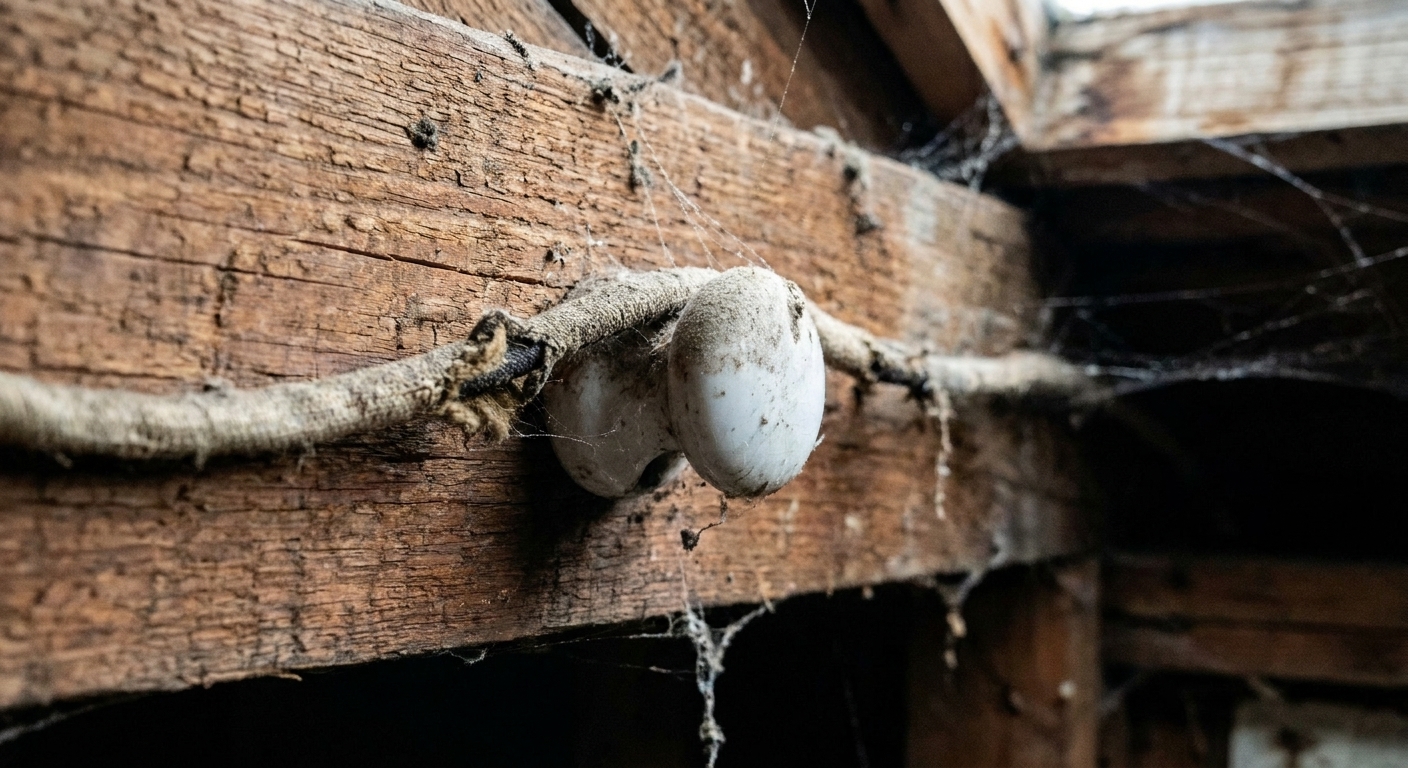
- Ceramic knobs nailed or screwed to framing members, used to support and separate wires in open air
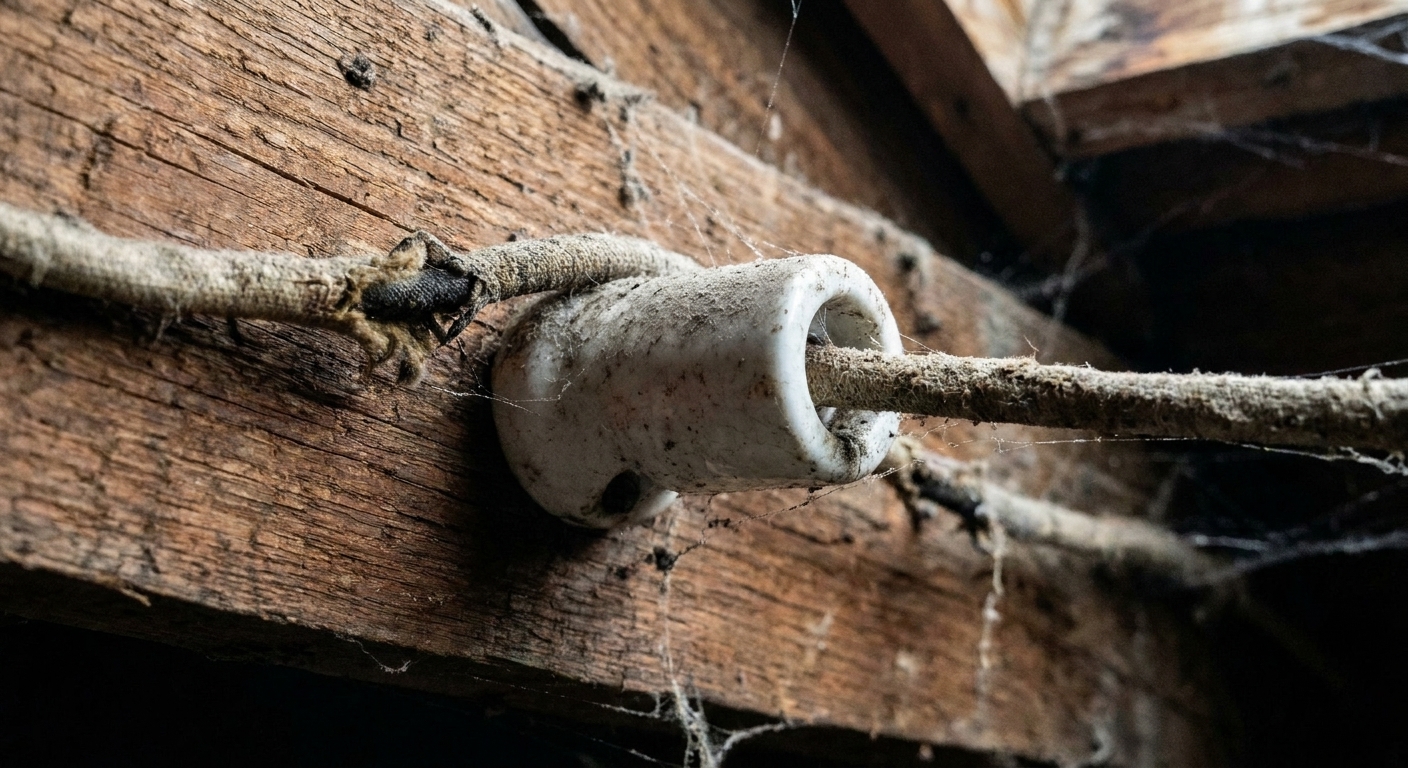
- Ceramic tubes where wires pass through joists or studs, basically a porcelain sleeve protecting the wire from wood
- Two separate conductors running apart from each other rather than bundled together like modern cable
- Cloth and rubber insulation on the wire, often brittle, dusty, or cracked
- Open splices or junctions not enclosed in a modern electrical box (this is common after decades of “just add on to it” repairs)
In an attic, you will often see the conductors run separately and supported on ceramic knobs as they cross framing. Sometimes it disappears under boards or older flooring, but the knobs and tubes usually give it away.
Why insulation can be risky
Attic insulation is great at what it does: slowing heat transfer. Unfortunately, that can be exactly what you do not want around older wiring that was intended to run in free air.
Heat is part of the hazard
Knob-and-tube systems were installed with the assumption that air circulates around the conductors. When you cover those wires with insulation, you reduce their ability to shed heat. That does not automatically mean every buried run will overheat on day one, but it does remove a safety factor from a system that may already be stressed by age, added loads, or sloppy modifications.
The wire insulation is often fragile
After many decades, the rubber and cloth insulation can dry out and crack. Even if it has worked fine for years, disturbing it during air-sealing or insulating can cause the insulation to crumble and expose the conductor.
Splices and “updates” may not be safe
The most dangerous knob-and-tube setups I see are not the original runs. They are the homeowner or handyman modifications from the last 40 to 80 years: open splices, mixed wire types, overloaded circuits, and questionable connections hidden under old decking.
It can become an insurance and resale issue
Some insurers treat active knob-and-tube as higher risk. Some will write a policy only if it is inspected, repaired, or replaced. Others may refuse coverage or add restrictions. Either way, confirm your situation directly with your carrier, and keep in mind that burying old wiring under insulation can raise questions during inspections because it makes verification harder.
Important: If you suspect knob-and-tube is still energized, do not cover it with insulation and do not assume “it’s probably dead” just because parts of your home have been updated.
Three common options
If you have knob-and-tube in the attic, you are not stuck. You just need a plan that keeps your house safe and keeps the insulation project from turning into a gamble.
Option 1: Keep it clear
This is the simplest option, and sometimes it is the only responsible one in the short term. It may mean:
- Skipping insulation in areas where the wiring runs
- Insulating other attic sections that are clear of knob-and-tube
- Focusing on air-sealing and weatherstripping elsewhere to get comfort gains without covering wiring
The downside is obvious: you leave performance on the table. But safety beats an extra inch of insulation every day of the week.
Option 2: Verify and abandon it
Sometimes knob-and-tube remains in the attic but is no longer feeding anything. Other times, only part of it is active. A licensed electrician can:
- Identify what is energized and what is not
- Trace what circuits still rely on it
- Disconnect it correctly at the source
- Confirm it is abandoned so it can be left in place (local rules vary) and you can proceed with insulation
When I say “abandoned,” I mean it is disconnected at the source, verified de-energized, and not feeding any loads. Simply turning off a breaker, pulling a fuse, or cutting a random section of wire in the attic is not the same thing.
Option 3: Rewire first
If the knob-and-tube is active, the cleanest path is typically to replace it with modern wiring. Yes, rewiring costs real money, but it also:
- Reduces fire risk
- Makes future electrical upgrades easier
- Removes an insurance headache
- Lets you insulate the attic properly without weird no-insulation zones
In my experience, many homeowners are surprised at how much better their house feels after a proper rewire and a full attic insulation job done right, especially in colder climates like mine here in Michigan.
How to tell if it is live
This is where DIY confidence needs to be paired with humility. You can do some basic, non-destructive checks, but you also need to know when to stop.
Signs it might still be in use
- You see knob-and-tube conductors running toward rooms that still have older outlets or lighting
- Parts of the home have two-prong receptacles or ungrounded circuits
- You find modern wiring spliced into older cloth-covered conductors
- Your electrical panel has a mix of old and newer circuits, and labeling is unclear
What you can do safely
- Look, do not tug. Do not pull on wires or move them around to “see where they go.”
- Assume unknown connections are energized. If knob-and-tube disappears into a junction box, a light box, or a wall cavity that clearly feeds living space, treat it as potentially live.
- Do not trust a quick tool check as proof. Non-contact voltage testers can be wrong, and old wiring can do weird things. Use them only as a rough clue, not a green light.
- Call an electrician for verification. An electrician can test properly and trace circuits without guesswork.
Spray foam warning
If you were planning to spray-foam the roofline or encapsulate the attic, slow down. Do not spray foam over knob-and-tube wiring unless it has been confirmed abandoned and your electrician and local code rules are on board. Foam can trap heat, hide damage, and make future inspection or repair a miserable job. If you have any doubt, treat foam as a hard stop until the wiring is dealt with.
If insulation is already there
You are not the first homeowner to discover this after the fact. Sometimes insulation was added decades ago, sometimes it was added last winter by a well-meaning crew that never looked closely enough.
What to do next depends on whether the wiring is active and on local requirements, but a smart sequence is:
- Stop adding insulation. Do not cover it deeper.
- Do not dig around aggressively. Moving insulation can disturb brittle wiring and create exposed conductors.
- Schedule an electrical inspection. You want a clear answer on what is energized and what condition it is in.
- Follow the electrician’s recommendation. That might be rewiring, disconnecting and abandoning, or in some cases removing insulation around active runs until the wiring can be replaced.
Tips before you insulate
- Walk the attic first. A five minute flashlight walk can save you from renting a blower and then hitting the brakes mid-project.
- Photograph what you see. Wide shots and closeups help an electrician give you quicker guidance.
- Plan wiring work before air-sealing and insulating. If rewiring is needed, do it first. It is cheaper and cleaner than digging through fresh insulation later.
- Assume the wiring is fragile. Even if it is not energized, decades-old insulation on the wire can crumble when bumped.
The stop-work point
Stop work immediately if you cannot tell whether the knob-and-tube wiring is still energized. Do not cover it with insulation “for now.” Do not bury it so you can deal with it later. Get a licensed electrician to identify what is live, what is abandoned, and what needs to be replaced before you proceed.
Insulation is one of the best comfort upgrades you can make. Knob-and-tube is one of those old-house realities where a little caution goes a long way. When in doubt, pause, verify, and then move forward with a plan you can feel good about for the next 20 years.