
Signs of a Failing Septic Drain Field
Learn the warning signs of a failing septic drain field, from soggy stripes and sewage surfacing to backups that pumping will not fix. Know when to call for a field evaluation.
Good grain. Great questions.
If you have a septic system, you already know the tank gets all the attention. But the drain field, also called the leach field, is where the real work happens. It is the area of soil that finishes the job by absorbing and treating the clarified wastewater that leaves the tank.
When the drain field starts to fail, it can look like a lawn problem, a plumbing problem, or a mystery odor that will not quit. And here is the key detail: a failing drain field can keep acting up even after the tank is pumped. That is the big difference we are sorting out today.
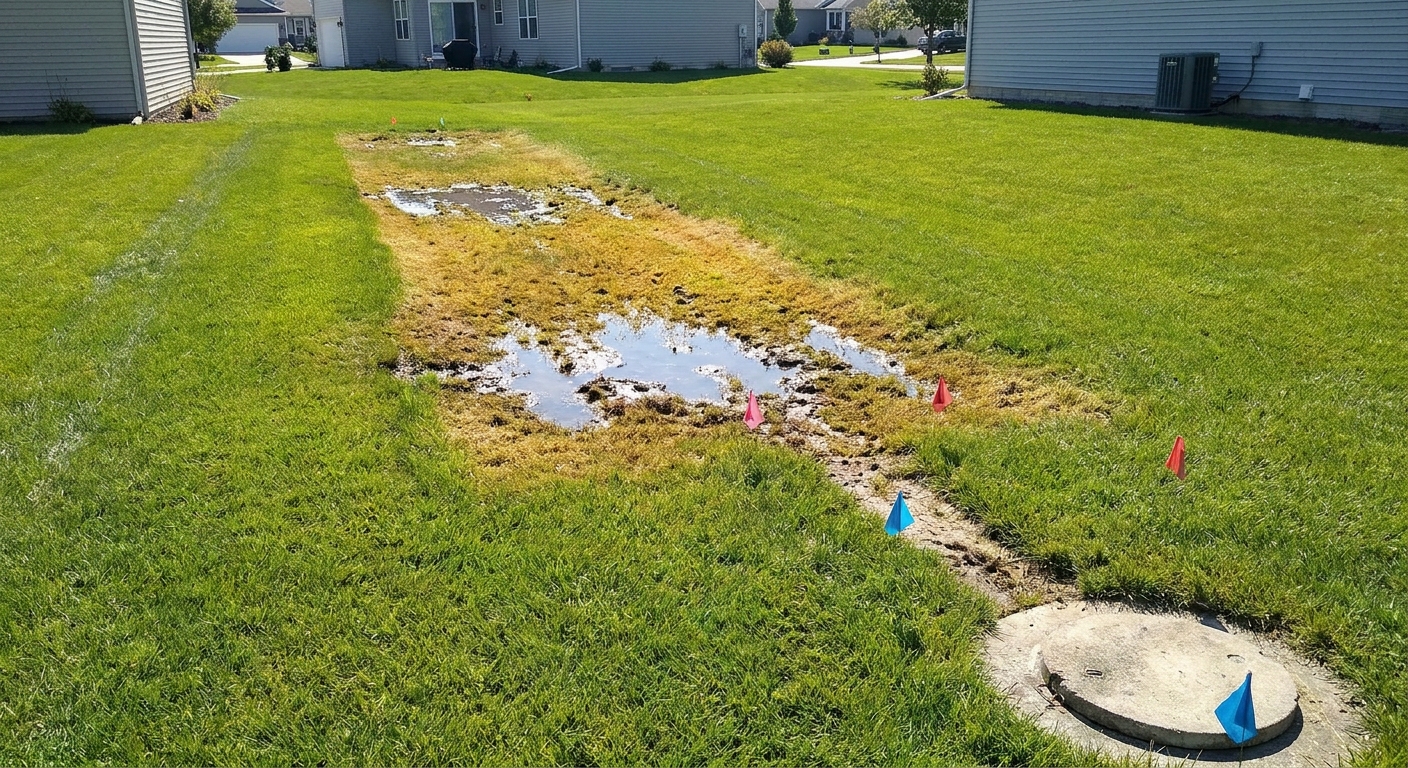
Drain field vs. tank
A septic tank that only needs pumping is basically a storage and settling issue. Solids and scum have built up and the tank does not have enough working volume left. Pumping usually brings quick relief.
A failing drain field is an absorption and soil-treatment issue. Effluent is leaving the tank, but the soil cannot accept it properly. Pumping the tank might provide a short break, but symptoms typically return fast because the field is still the bottleneck.
Think of it like this: pumping the tank is emptying a bathtub. A failing drain field is a clogged drain pipe. You can bail water for a bit, but the slow drain is still there.
Common signs of failure
1) Sewage surfacing in a line
This one is as clear as it is unpleasant. If you see gray or brown water, sludge, or toilet paper surfacing outdoors in a straight-ish line, that often traces the path of a trench or a distribution line in the drain field.
- Where it shows up: along the field area, downhill from the tank, or near where pipes run.
- What it means: effluent is not infiltrating into soil like it should, so it is finding the easiest path upward.
Safety note Surfacing sewage is a health hazard. Keep kids and pets away, and avoid mowing or working in that area until it is remediated. If you must go near it, wear gloves and boots and wash up thoroughly afterward. Call a septic professional promptly.
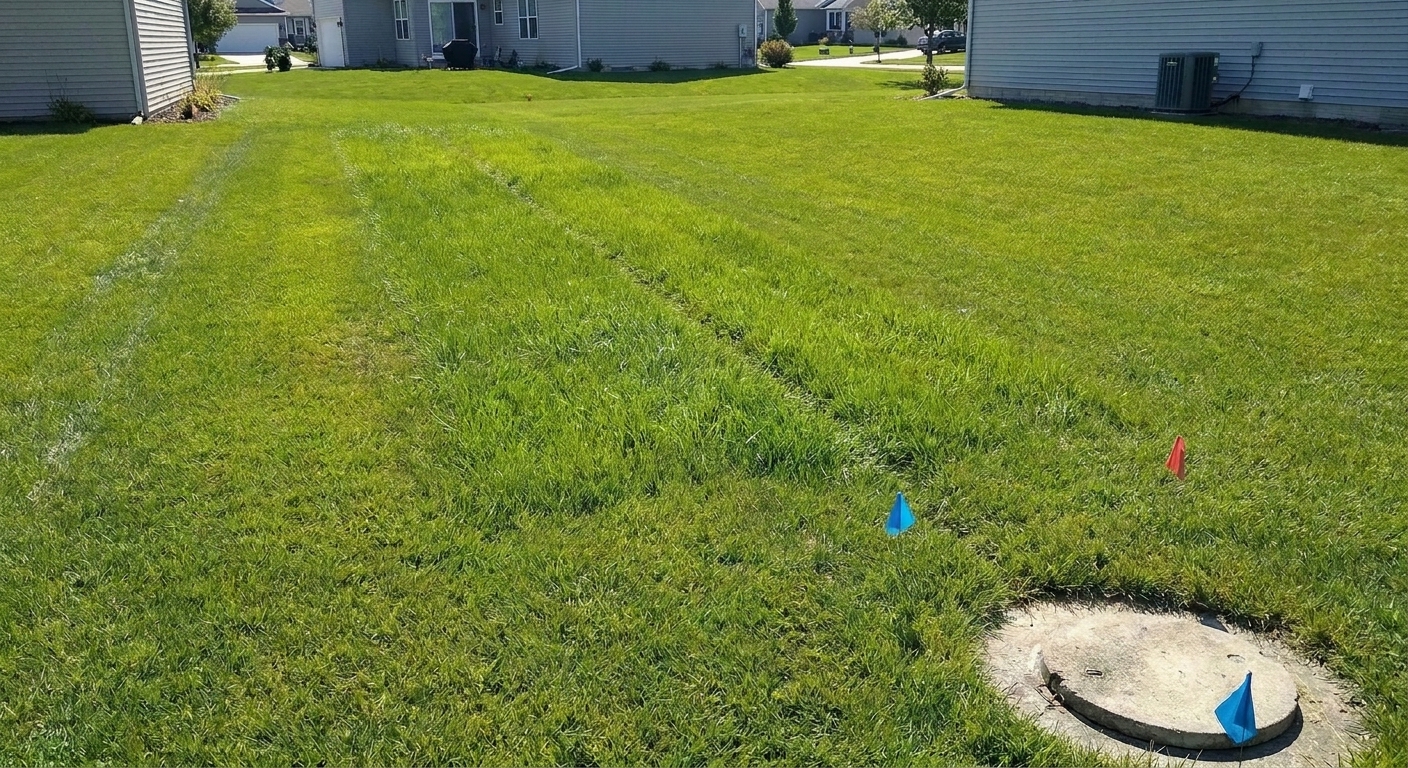
2) A bright green stripe
A drain field can create a "too healthy" patch of grass when it is leaking or overloaded. You may notice one lush stripe or a rectangular area that stays greener and grows faster than the rest of your lawn.
- Why it happens: extra moisture and nutrients are feeding the grass close to the surface.
- Why it matters: a small change can be an early warning, especially if it comes with odors or soggy soil.
3) Soggy ground that returns
After the tank is pumped, a yard above the drain field might dry up for a short time. But if the same area becomes spongy again soon after, that points away from a simple full tank and toward field saturation.
Drain fields fail gradually for many reasons, but the symptom is similar: the soil is no longer taking effluent at a normal rate.
4) Sewage odors outdoors
Septic systems should not smell like much outside. If you get persistent sewage or rotten-egg odors outdoors, and the smell seems strongest over the drain field area, take it seriously.
- More concerning: odor plus wet spots, odor plus a green stripe, or odor that returns soon after pumping.
- Also true: odors are not exclusive to drain field failure. Dry P-traps, venting issues, or even some well-water treatment setups can create similar smells, so pair odor with other symptoms before you assume the field is the culprit.
5) Backups that pumping does not fix
When the tank is simply full, pumping often improves things quickly. If you pump the tank and still get gurgling toilets, slow drains, or backups, that is a strong clue the problem is downstream.
Sometimes the culprit is a blocked line between the house and the tank, or between the tank and the field. But persistent symptoms after pumping often trigger a closer look at distribution, field condition, pump components (if you have them), and soil saturation.
Look-alike problems
Not every wet patch is a doomed field. Here are a few common look-alikes worth sorting out.
Plumbing clog in the house
If only one fixture backs up, or issues are limited to one bathroom, you may be dealing with a house plumbing clog rather than a septic field problem.
Water line or irrigation leak
A constant wet spot with no odor, no toilet issues, and no changes after septic pumping could be a supply water leak or sprinkler line problem.
High groundwater or heavy rain
Drain fields need oxygen in the soil. If the water table is high or the ground stays saturated after storms, even a functional system can struggle temporarily. The red flag is repeat performance in dry or normal weather, not just during the soggy weeks.
Full tank or clogged outlet filter
Some systems have an effluent filter at the tank outlet. If it clogs, it can cause slow drains and backups. That is still serious, but it is not the same as a failed field. A septic pro can check and clean it as part of service.
Pump or float failure
If your system uses a pump (often in a pump tank or dose tank), a failed pump, stuck float, or electrical issue can mimic a field problem because wastewater is not moving where it should. A pro can confirm whether you have a gravity system or a pump-assisted setup and test the components safely.
Why fields fail
Drain fields are simple, but they are picky. They rely on the right balance of flow, oxygen, and soil structure. Common failure drivers include:
- Hydraulic overload: too much water entering the system from leaks, long showers, or laundry stacked back to back.
- Biomat buildup: a natural bacterial layer forms in trenches over time. Some biomat is normal, but excessive buildup can reduce infiltration.
- Compacted soil: driving or parking on the field, heavy equipment, or construction over the area reduces the soil’s ability to absorb.
- Roots: trees and shrubs can invade pipes and trenches, blocking flow or disrupting distribution.
- Improper tank maintenance: infrequent pumping can allow solids to move into the field, accelerating clogging.
- System age or design limits: older fields can reach the end of their service life, or a system may be undersized for household use.
Pumping or field issue?
If you only remember one shop-friendly rule, make it this:
Pumping should buy you time. If pumping barely helps or the problem returns quickly, stop guessing and get the drain field evaluated.
More like a pump-out
- It has been years since the last pump-out and you are seeing slow drains.
- No wet spots in the yard.
- No persistent outdoor sewage odor.
- After pumping, the system behaves normally again.
More like field trouble
- Wet, spongy ground over the field or sewage surfacing outdoors.
- A bright green stripe paired with odor or soggy soil.
- Backups continue after pumping or return very quickly.
- Multiple fixtures slow or gurgle, especially after water use.
Typical pump timing
Pumping schedules vary by tank size, household size, and what goes down the drain, but most homes land somewhere around every 3 to 5 years as a general guideline. Bigger households, smaller tanks, and heavy garbage-disposal use can shorten that window. When in doubt, a septic company can measure sludge and scum levels and tell you whether you actually need a pump-out.
When to get an evaluation
Call a septic professional for a drain field evaluation if any of these are true:
- You have surfacing sewage anywhere in the yard.
- The yard over the field is chronically wet in normal weather.
- The tank has been pumped and backups continue or return within days or weeks.
- There is a strong sewage odor outdoors that persists.
- You are planning a major home change that increases water use, like adding a bedroom or finishing a basement bathroom.
What an evaluation includes
Exactly what gets checked depends on your system, but a real evaluation often includes some mix of:
- Checking the tank liquid level and inspecting the inlet and outlet baffles.
- Cleaning or replacing the effluent filter (if your tank has one).
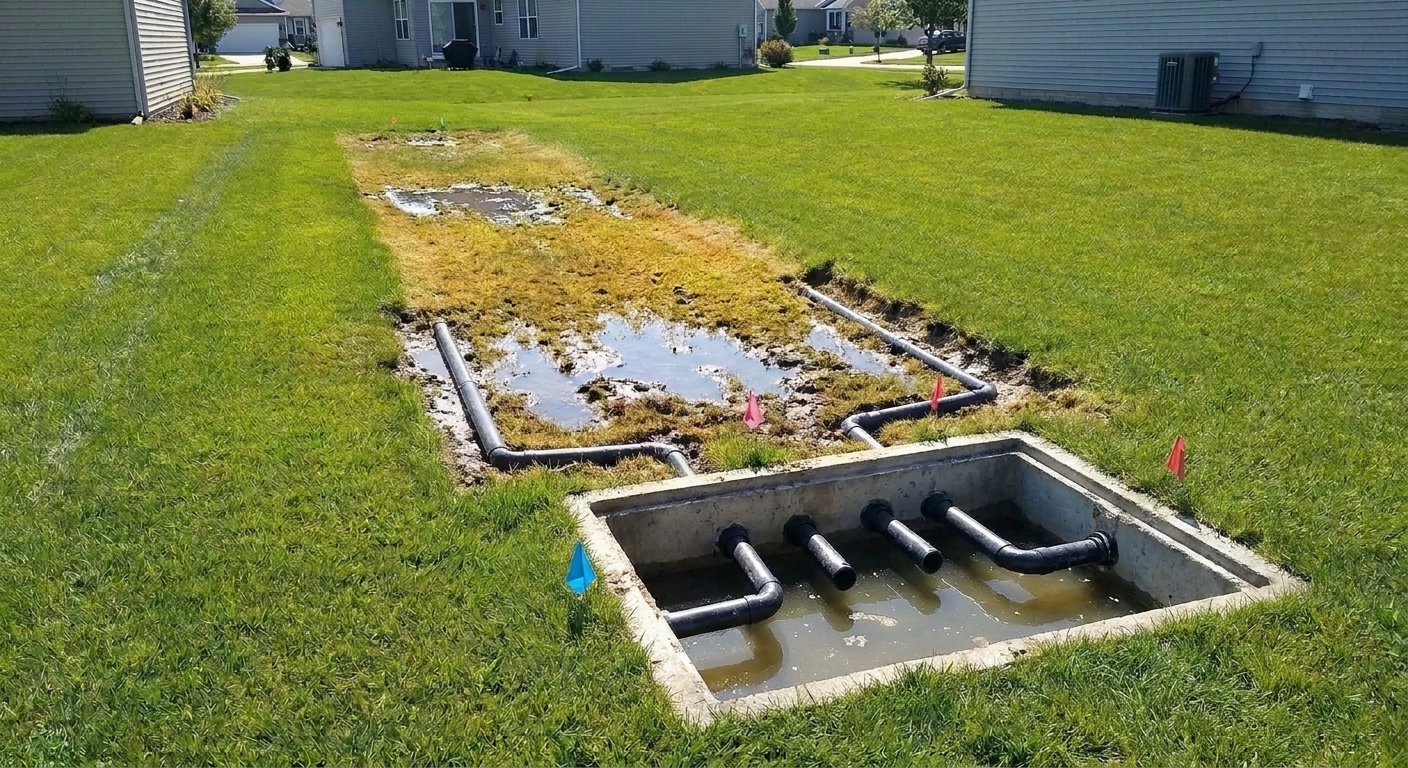
- Inspecting the distribution box to see whether it is level and actually splitting flow evenly.
- Scoping lines to look for bellies, breaks, or root intrusion.
- Testing pump operation and floats if the system is pump-assisted.
- Looking for signs of saturation, including ponding in trenches or unusually high liquid levels where they should not be.
The right fix depends on the cause, so this is one of those times where diagnosis is worth more than guesswork.
Do not do this Do not drive on your drain field. Do not route roof gutters or sump pump discharge into the septic area. Do not open tank lids yourself. Septic tanks can contain toxic gases and present a serious fall hazard. Also skip the miracle additives that claim to "restore" a failed drain field. If your field is saturated or clogged, dumping a product in the toilet rarely changes the physics.
One more nuance: do not bury your drain field or raise the grade to “dry it up” without a pro and the right permits. However, light surface grading to divert runoff away from the field can be helpful when done correctly. Your septic pro or local health department can tell you what is allowed.
What to do right now
While you are lining up service, you can reduce pressure on the system. Nothing here fixes a failing field, but it can prevent a bad day from becoming a worse one.
- Cut water use: short showers, pause laundry, run dishwasher only when full.
- Stop leaks: running toilets and dripping faucets add up quickly.
- Keep vehicles off the area: avoid compacting soil above trenches.
- Keep the area clear: keep pets and kids away from wet or smelly areas.
- Write down symptoms: when it happens, what fixtures are affected, and whether weather changes it. That helps the pro diagnose faster.
Drain field FAQs
Can heavy rain cause drain field problems?
Yes. Saturated soil has less air space, so it cannot accept and treat effluent as well. A functional system might struggle temporarily after extreme weather or high groundwater. If problems happen repeatedly in ordinary, dry conditions, that leans toward an underlying field or distribution issue.
Why is there a green stripe over my septic field?
Often it is extra moisture and nutrients near the surface. It can be an early warning sign, especially if the area is also soft underfoot or has odor. By itself, greener grass is not a diagnosis, but it is worth paying attention to.
Does pumping fix a failing drain field?
Usually no. Pumping can reduce symptoms briefly by giving the system more storage, but it does not restore the soil’s ability to absorb. If pumping does not resolve the problem for long, it is time for a field evaluation.
Is a failing drain field an emergency?
Surfacing sewage and indoor backups are urgent because of health risks and potential property damage. Even without backups, chronic wet areas over the field should be handled promptly to prevent worsening saturation and contamination.
The Knob takeaway
A tank that needs pumping often acts better after, well, pumping. A drain field that is failing tends to keep throwing the same soggy, stinky, backup-prone fit even after service.
If you have a bright green stripe, wet ground that comes back, sewage surfacing in a line, or backups that pumping will not fix, do not just keep emptying the tank and hoping. Call for a drain field evaluation and get the real bottleneck identified.