
How to Thaw a Frozen P-Trap
After a hard freeze, a sink or tub may stop draining because the P-trap froze. Here’s how to tell, how much water to run, and safe ways to thaw it.
Good drain. Great questions.
If your sink or tub still has running water at the faucet but suddenly won’t drain after a hard freeze, you might be dealing with a frozen P-trap. That little U-shaped bend under a sink or inside a vanity is designed to hold water and block sewer gas. In cold conditions, that standing water can turn into a tidy little ice plug that stops drainage cold.
The goal is to thaw it gently, avoid cracking plastic or loosening seals, and make sure you are not actually dealing with a frozen supply line, a partial blockage farther downstream, or a venting issue.
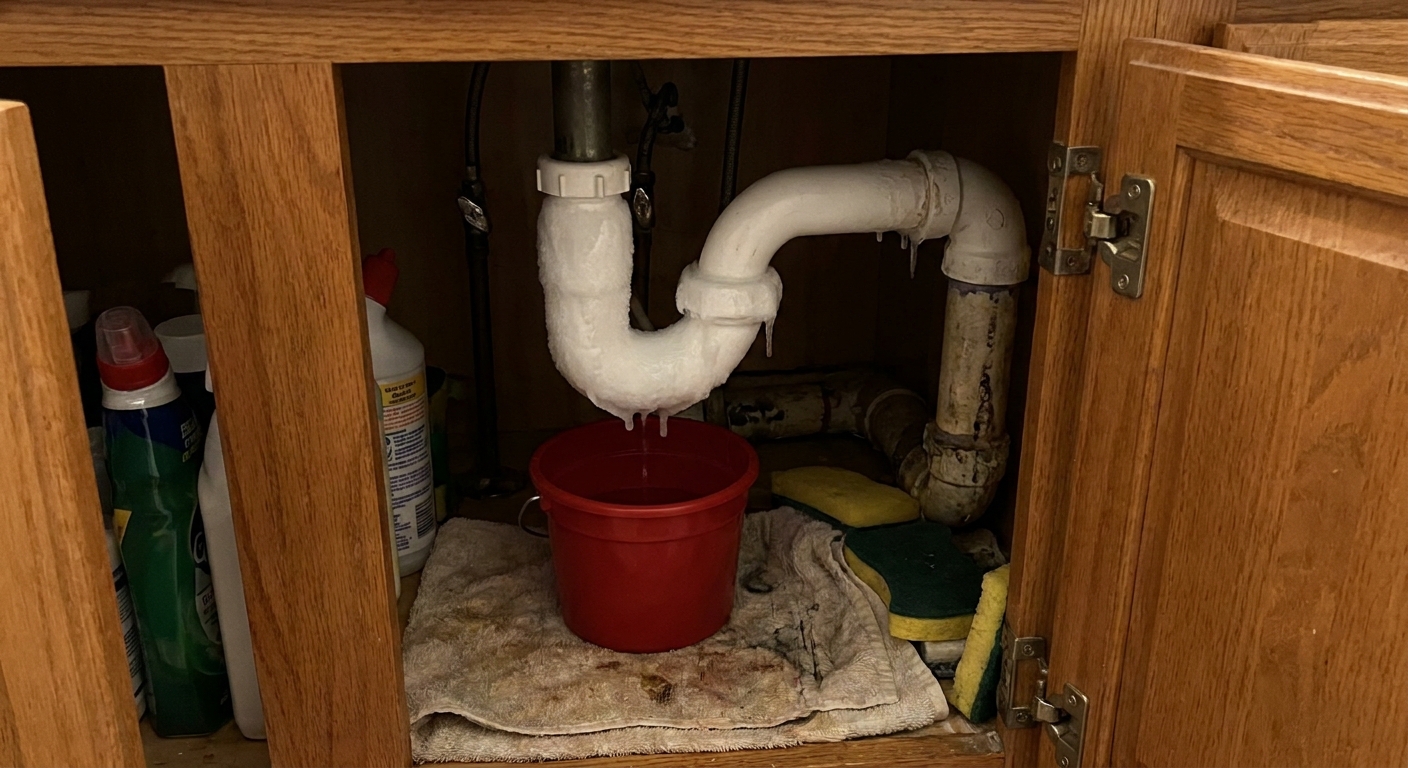
First: Make sure it’s the P-trap
A frozen P-trap looks a lot like a clog at first. These quick checks help you aim your effort at the right spot.
Signs the trap is frozen
- Water flows from the faucet normally (hot and cold both run).
- The fixture fills up but drains slowly, or it does not drain at all.
- The problem appeared right after a cold snap, especially in a bathroom on an exterior wall, a sink in a garage, or a kitchen over a crawl space.
- You can access the trap and it feels very cold to the touch, or you see frost/condensation on the bend.
Signs it’s not the trap
- No water at the faucet (or only a trickle): that points to a frozen supply pipe, not the drain trap.
- Multiple drains in the house gurgle or drain poorly: that can point to a bigger drain line issue, a partial blockage in a branch or main line, or venting trouble.
- Toilet bubbles when another drain runs, or there is strong sewer odor: often a venting issue or a partial drain blockage, not just the trap.
Should you run water or leave it alone?
For a frozen trap, you usually want a middle path: do not keep the faucet running unattended, but small amounts of warm water can help once you are actively thawing.
What to do
- Stop using the fixture while it is frozen. You do not want to overflow a sink or tub.
- If the basin is already full, bail some water out into a bucket so you have room for testing and thawing.
- When you are ready to thaw, use short bursts of warm water (not boiling) to help melt the ice from the inside as you warm the trap from the outside.
- If it is not draining, do not add more than a cup at a time.
What not to do
- Do not leave the faucet running hoping it will “push through.” A frozen trap is a closed gate. You will just fill the basin.
- Do not dump boiling water into a cold trap. Sudden temperature shock can crack plastic and stress seals. Use hot tap water, or water warmed on the stove but allowed to cool to very hot, not rolling-boil.
Safe ways to thaw a frozen P-trap
Pick the gentlest method that fits your access. The trap is usually plastic (PVC/ABS) or chrome-plated metal. Both can be damaged by aggressive heat.
Before you start: set up for drips
- Put a bucket under the trap.
- Lay down a towel in the cabinet base.
- Open the cabinet doors to let room air reach the plumbing.
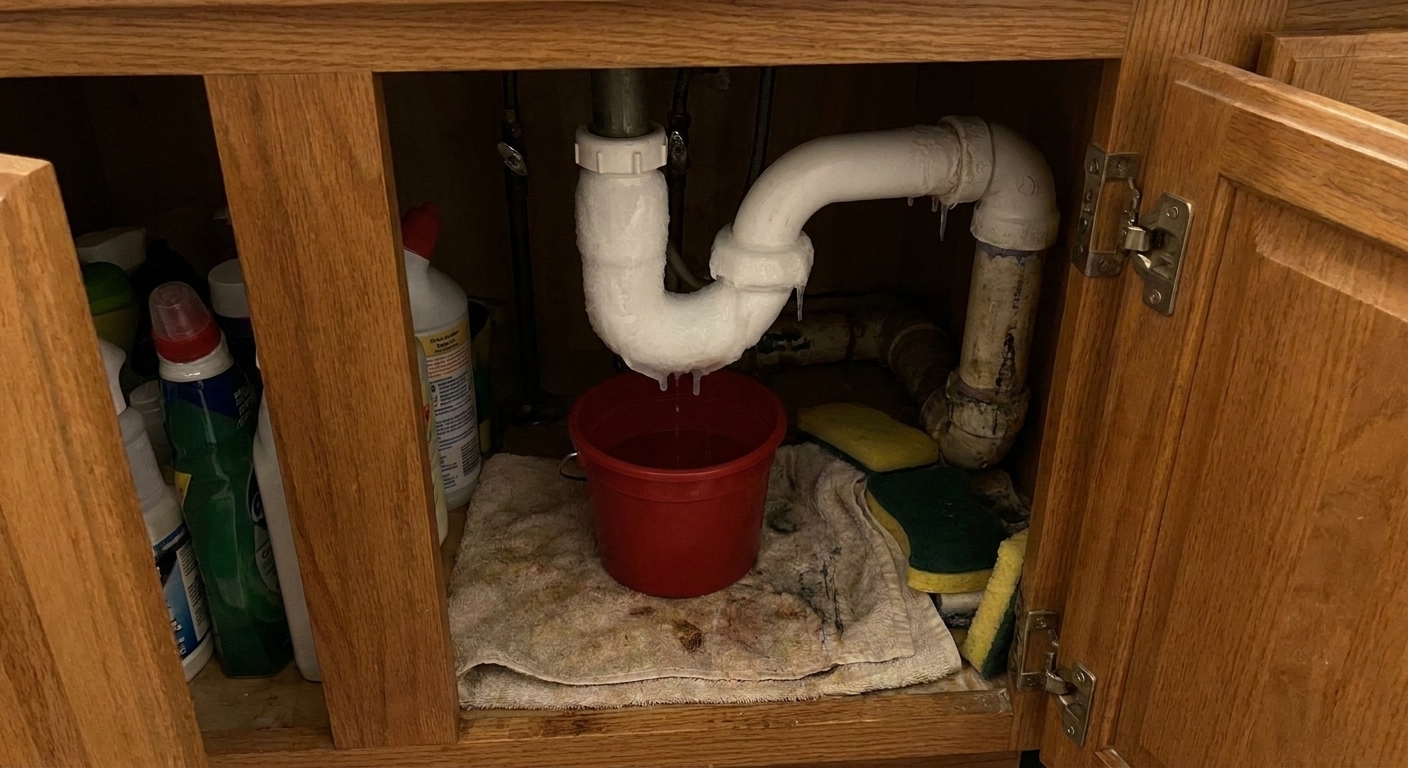
Method 1: Hair dryer (my favorite controlled option)
A hair dryer gives you directional heat without an open flame.
- Set it to low or medium.
- Hold it a few inches away and warm the U-bend of the trap first, then the trap arm leading into the wall.
- Keep the dryer moving. Do not park it in one spot.
- Every few minutes, try a small cup of warm water down the drain.
- When it starts to drain, run warm water for 1 to 2 minutes to fully clear slush.
If you smell hot plastic, stop and let things cool. You are aiming for “thaw,” not “toast.”
Method 2: Warm, wet towels (slow and safe)
- Soak towels in very warm water, wring them so they are not dripping.
- Wrap the towels around the trap’s curve.
- Refresh with newly warmed towels every 5 to 10 minutes.
This takes longer, but it is gentle and hard to mess up.
Method 3: Heating pad (steady heat)
A plug-in heating pad can work well if the trap is accessible in a cabinet.
- Keep the pad dry and away from standing water.
- Use a low setting.
- Plug it into a GFCI-protected outlet if available.
- Do not leave it running unattended inside a cabinet.
Method 4: Heat cable (for repeat offenders)
If this trap freezes every winter, a listed heat cable installed per manufacturer directions can be a long-term fix. Follow the specific heat-cable instructions for routing, fastening, and whether it can be covered by insulation.
Skip open flames. Avoid torches, lighters, or any open flame under a sink. Besides fire risk, you can damage plastic traps and nearby finishes fast.
If the trap is on an exterior wall
Exterior-wall plumbing is more likely to freeze because there is less warm indoor air around the pipes, and insulation can be missing or poorly installed behind the cabinet.
After it thaws: check for cold spots
- Feel for a draft at the back of the cabinet or where the drain enters the wall.
- Look for gaps around the drain pipe penetration.
- Check that the cabinet is not packed so tight that it blocks warm room air from reaching the plumbing.
Easy prevention steps
- On very cold nights, open the cabinet doors to let warm air circulate.
- Seal gaps around the pipe penetration with appropriate sealant or expanding foam used carefully. Seal the air leak, but do not encapsulate the pipe or bury fittings you may need to service later.
- Add insulation where possible behind the cabinet, following local code expectations.
- Let the fixture run a brief warm-water rinse occasionally during extreme cold to keep water moving, but only when you can confirm it is draining properly.
Frozen trap vs frozen supply
These get mixed up a lot because both show up after a freeze. The fix is different.
Frozen P-trap (drain side)
- Symptom: faucet works, but water will not drain.
- Location: under sink, in vanity, or in the trap arm going into a cold wall.
- Fix: warm the trap area and then flush with warm water once it drains.
Frozen supply pipe (water-in side)
- Symptom: little or no water comes out of the faucet, often worse on the cold side.
- Location: supply lines in exterior walls, unheated crawl spaces, attic runs, or near rim joists.
- Fix: carefully thaw the supply line and watch for leaks. This can be urgent because a split pipe may leak once it thaws.
If you have no water at the faucet: do not focus on the trap first. A frozen supply line can burst and cause damage as it warms. If you suspect that, shut off water if needed and consider calling a plumber, especially if you cannot see the pipe run.
Vent issues vs one frozen trap
A frozen plumbing vent (roof stack) is a different beast. More broadly, poor venting can make drains act strange, and in some climates that poor venting is sometimes caused by an iced-over roof vent.
Clues venting (or main drain) is the issue
- Gurgling from multiple drains.
- Traps seem to lose water and you notice sewer odor.
- Several fixtures drain poorly at the same time, especially after heavy snow and deep cold.
Clues it’s just one frozen trap
- Only one sink or tub is affected.
- No whole-house gurgling.
- The trap area is in a known cold spot like an exterior vanity wall.
If you strongly suspect a roof vent is iced over, that can involve roof access and winter safety decisions. For many homes, that is a good moment to call in a pro rather than turning a drain problem into a ladder problem.
When to take the trap apart
Disassembling the P-trap can solve two problems: it lets you thaw it faster, and it confirms whether you have ice or a physical clog.
Consider removing the trap if
- You cannot thaw it with external heat after 30 to 60 minutes (typical, but it varies with how cold the cavity is).
- You suspect there is also a clog (hair, grease, or gunk) mixed in with ice.
- The trap is a standard slip-joint style and you can access it easily.
Don’t remove the trap if
- The plumbing is old, corroded, or you are likely to crack a fitting.
- You see signs of previous leaks and patched joints.
- It is a glued trap (not slip-joint). Those are not meant to be taken apart casually.
If you do remove a slip-joint trap: bucket underneath, loosen the nuts, lower the trap, and thaw it in a sink or tub with warm water. Clean any buildup, then reassemble hand-tight plus a small nudge. Make sure the slip-joint washers are seated correctly. If a washer is deformed or won’t seal, replace it. Do not over-tighten.
Some traps are not easy to reach
Tub and shower traps are often in the floor system or behind an access panel, not in an open cabinet. If you cannot access the trap without opening a wall or ceiling, stick to gentle warming of the room and nearby surfaces and consider calling a plumber rather than guessing with demolition.
After it drains: flush and check for leaks
Once you get flow back, finish the job so it does not refreeze as a half-thawed slush plug.
- Run warm water for 1 to 2 minutes.
- Check every slip nut and joint for drips while water is running.
- Dry the pipes with a towel and check again in 10 minutes. Small leaks like to play hide-and-seek.
Stop and call a pro if you see cracking, active leaking you cannot stop, heavy corrosion, or you suspect a freeze inside a wall or ceiling. Also call for help if the same spot keeps freezing after you have sealed drafts and improved insulation. Repeat freezes are how small problems become big repairs.
FAQ
Can I pour salt or antifreeze into a frozen trap?
Skip it. Household drain systems are not the place for improvised chemistry, and you still need heat to thaw. Focus on safe warming and then prevention. If you have an infrequently used drain in an unheated area (like a seasonal sink), talk to a plumber about winterizing options appropriate to your setup.
Why did only one sink freeze?
Usually location. One vanity might sit on an exterior wall with a drafty pipe penetration, or a kitchen sink may be over a colder cavity. The rest of the house might be fine.
How long should thawing take?
If you can access the trap and apply steady gentle heat, many frozen traps thaw in the 15 to 45 minute range. If the freeze is deeper in a wall, it can take longer and may point to a bigger insulation or airflow problem.
What if it thaws and then freezes again the next night?
That is your sign to treat it as a cold-zone plumbing issue: seal drafts, improve insulation where practical, and allow warm room air into the cabinet during extreme cold. Repeat freezing is how small problems become big repairs.