
How to Clean a Septic Effluent Filter
Slow drains can come from a clogged septic effluent filter, not a full tank. Learn how to find the outlet filter, pull it safely, rinse it, and reinstall it, plus signs your tank still needs pumping.
Good grain. Great questions.
If your sinks and tubs are draining like they are sipping through a coffee straw, your first thought might be: septic tank is full. Sometimes, though, the tank is fine and the effluent filter at the outlet is the part throwing the tantrum.
One quick reality check before we blame the septic system: slow drains can also be purely in-house plumbing (a trap, a branch line, a vent issue). What makes an effluent filter clog stand out is that it tends to show up as whole-house sluggishness or intermittent backups, often after a big water draw.
An effluent filter is designed to catch solids before wastewater leaves the tank for the drainfield. When it clogs, your house plumbing can bog down fast, especially after laundry, long showers, or a busy weekend. The good news: cleaning it is usually a straightforward maintenance job that does not empty the tank.
Filter vs. full tank: the signs
A clogged outlet filter and an overdue pump-out can look similar from inside the house. Here are the patterns that often point to a filter issue.
Signs the effluent filter may be clogged
- Multiple slow drains at once (especially after heavy water use like laundry day or multiple showers).
- Toilets still flush, but slowly, or they seem fine until a big water run happens, then everything bogs down.
- Gurgling in drains when water is running elsewhere.
- Intermittent backups that improve for a while, then return.
- No obvious septic odor outside (a soft clue at best, since odors depend on weather, venting, and site conditions).
Signs it might be more than the filter
- Sewage odors near the tank or in the yard, especially around the drainfield.
- Standing water or unusually lush grass over the drainfield area.
- Frequent backups that return quickly even after you reduce water use.
- Very old pumping interval for your household size and tank capacity.
- Liquid level noticeably above the outlet invert or up into the riser when you open the access. A properly working gravity tank typically sits at the outlet level by design, so higher than that suggests a downstream restriction.
Septic tanks contain hazardous gases and bacteria. Do not enter a septic tank, do not lean your face over the opening, and keep kids and pets well away from the access area.
What the filter is and where it is
Most effluent filters sit at the outlet side of the septic tank, typically in an outlet tee or outlet baffle assembly. Designs vary by tank type and age, but the idea is the same: let solids settle, then send clarified wastewater out while keeping floaters and stragglers inside.
Depending on your system, the filter can be:
- A cartridge-style filter that slides out of a housing at the outlet tee.
- A filter integrated into an outlet tee that lifts straight up.
- Accessible from a dedicated riser and lid at ground level, or only under a buried lid.
If you have a newer system or a system with risers, the filter is often reachable without digging. If your lids are buried, you may need to locate and uncover the tank access first.
One more wrinkle: some systems with pumps, advanced treatment units, or additional filter screens can have different access points and shutdown steps. If you know you have anything beyond a basic gravity tank, follow your system documentation or call your provider.
Tools and supplies
Nothing fancy, just the right stuff so you are not improvising over an open tank.
- Disposable nitrile gloves (and a second pair as backup)
- Eye protection
- Old clothes or coveralls and waterproof boots
- A garden hose with a spray nozzle
- A 5-gallon bucket (handy for drips and carrying tools)
- A small plastic scraper or nylon brush (optional, for stubborn buildup)
- Trash bag and paper towels for cleanup
- Flat shovel if the lid is buried
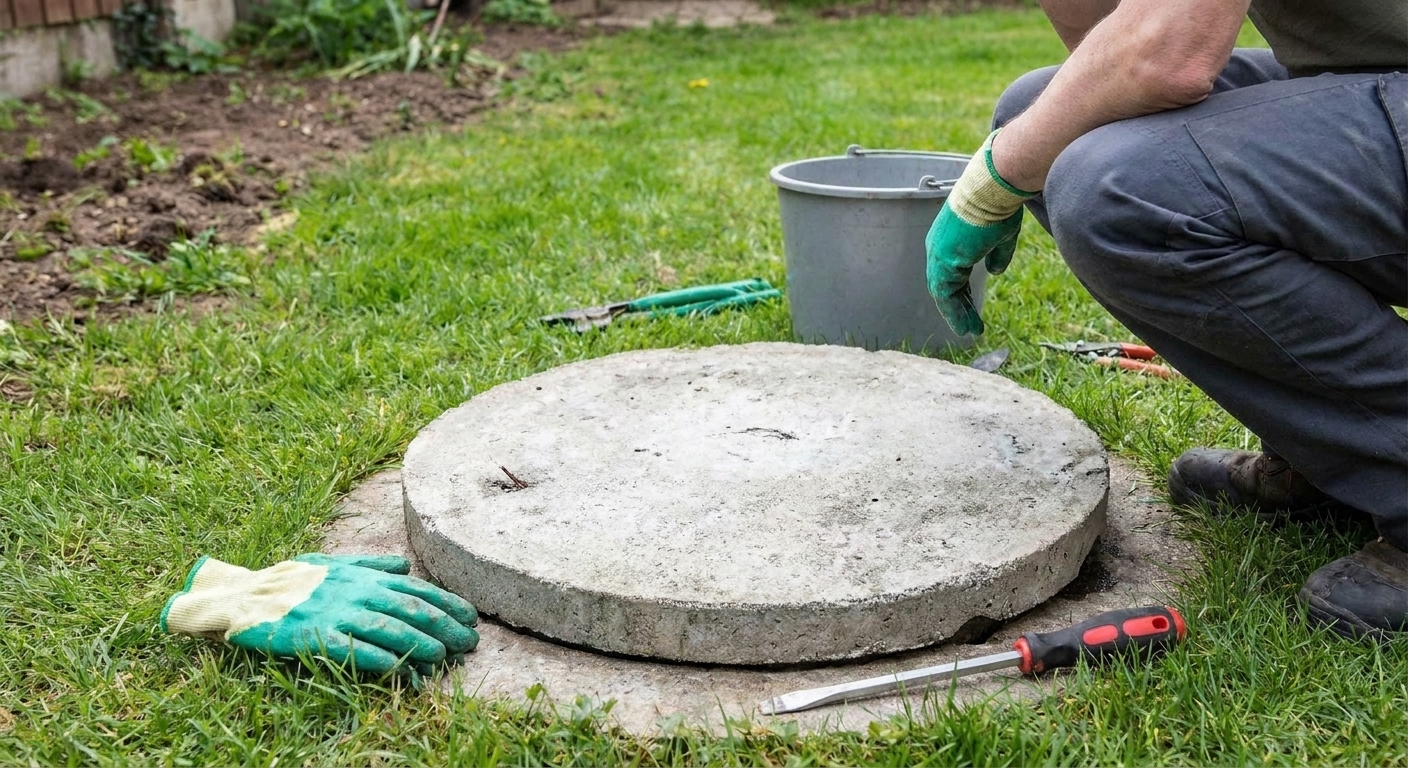
- Screwdriver or socket if your access lid is bolted down
Skip the bleach and harsh chemicals. You are rinsing solids off a filter, not sanitizing a kitchen counter, and you want your septic biology to keep doing its job.
How to clean the filter
1) Cut water use in the house
Pause laundry, long showers, dishwashers, and any big water draws. You want a calm tank while you work and you do not want a surprise surge while the filter is out. Keep water use light until you are done and the filter is back in place.
2) Open the right access lid
You are aiming for the outlet-side access, not the inlet. Many tanks have two main access points, one over the inlet and one over the outlet. If there is only one large lid, it may still give access to both sides, depending on the tank design.
If you are unsure which end is the outlet:
- The outlet leads toward your drainfield.
- The inlet comes from your house.
- The outlet side is often "quieter" with fewer floating bits than the inlet side.
If the lid is heavy, cracked, or awkward, get help. A dropped lid can crack a riser or chip concrete, and fingers lose arguments with concrete every time.
3) Find the outlet tee or baffle and the filter handle
Many filters have a visible handle at the top. It may be centered, or slightly off to one side inside the outlet opening.
4) Pull the filter slowly and let it drain
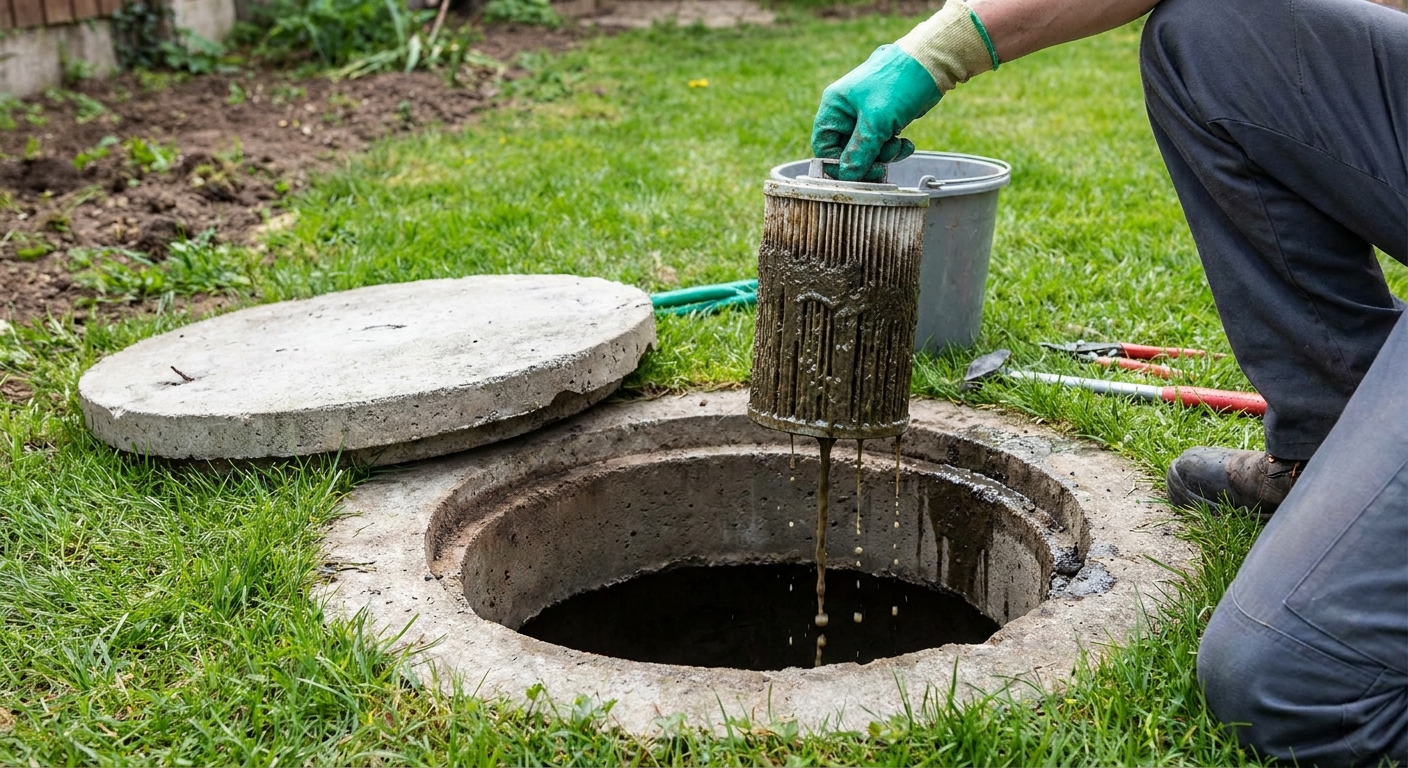
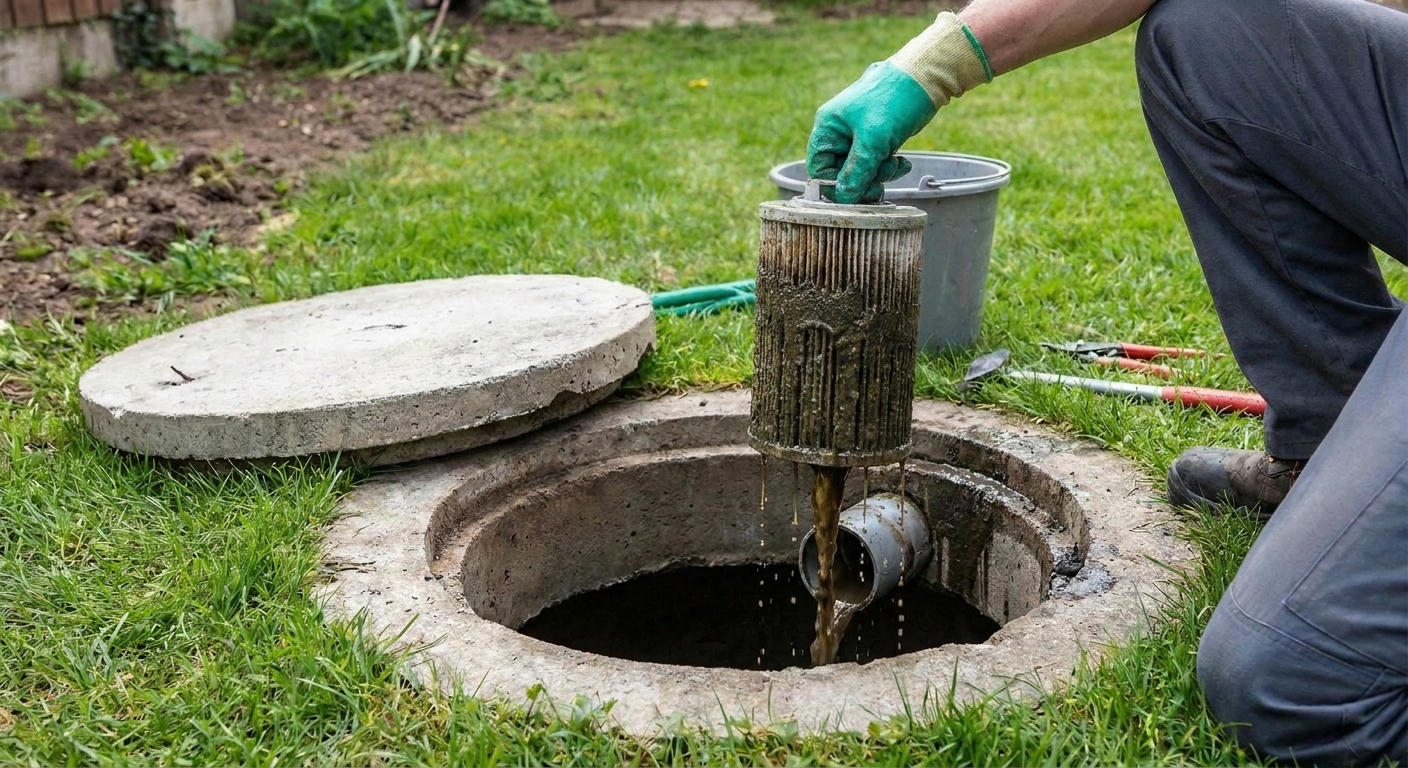
Lift straight up if possible. Pause above the outlet housing and let excess liquid drain back into the tank. This reduces mess and keeps solids where they belong.
If the filter feels stuck or the handle looks cracked, do not force it. A broken handle or damaged outlet tee is a "call a pro" moment.
Expect the filter to be slimy and dark. That is not a surprise. That is the job.
How to rinse it without trouble
Rinse back into the tank, not onto the lawn
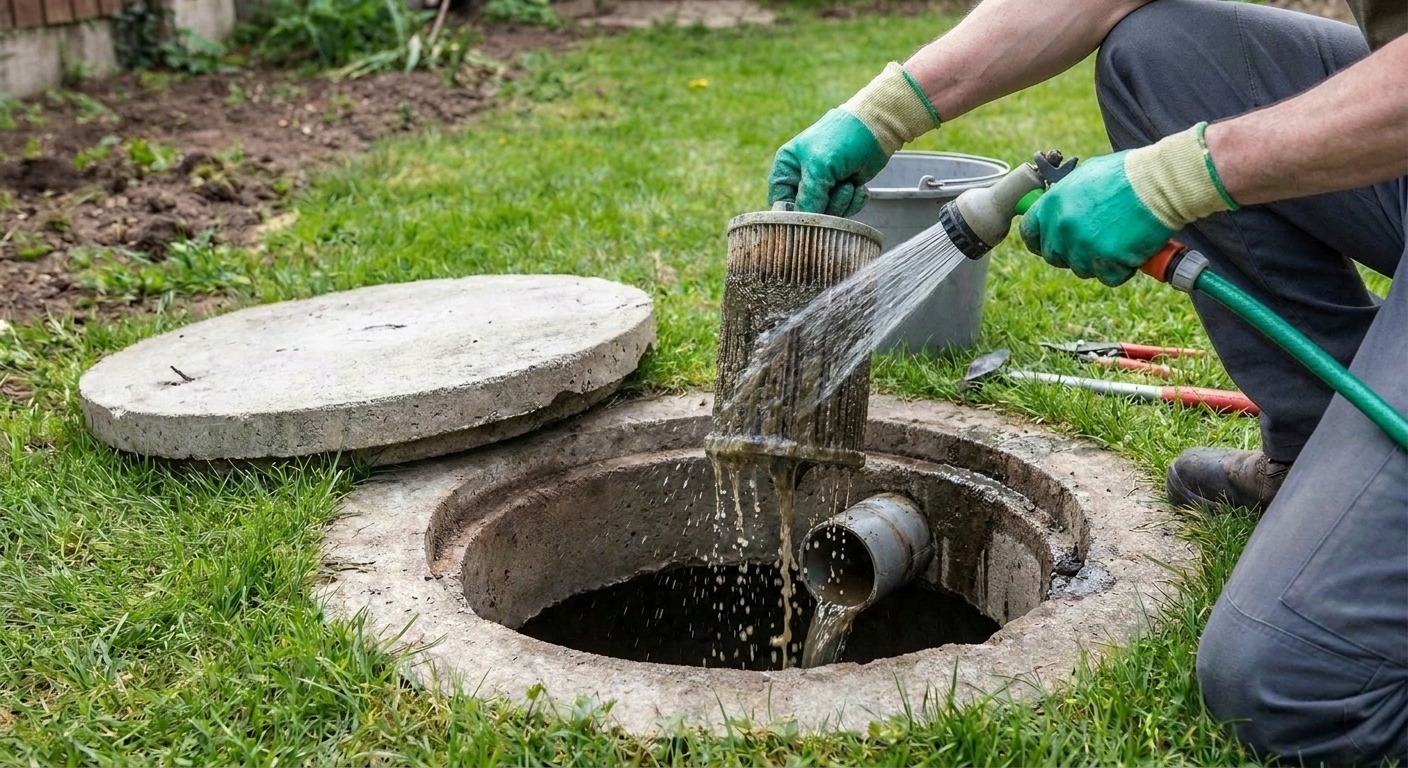
Hold the filter over the open tank access and use a hose to spray from top to bottom. The goal is to send the gunk back into the tank, not into your yard.
Use firm hose pressure, not a pressure washer
A strong garden hose spray is usually enough. A pressure washer can damage plastic filter screens or blast material where you do not want it.
Spray the filter, not the outlet opening
Avoid aiming the hose stream into the outlet tee or outlet pipe area. You do not want to push loosened debris toward the outlet. Keep the filter centered over the tank opening while you rinse so everything falls back where it belongs.
Work the slots clean
Rotate the filter as you rinse. If buildup is stubborn, use a nylon brush or plastic scraper gently. Avoid metal tools that can gouge the screen.
When it is clean, you should be able to see the slots clearly and water should flow through without pooling on the surface.
Reinstall and check
Slide the filter back into its housing the same way it came out. Most designs have a keyed shape so it only fits correctly one way.
- Lower it slowly until it fully seats.
- If there is a cap or retainer, secure it.
- Replace and secure the access lid (bolts or screws if present).
Once everything is closed, run water at a sink for a minute and listen. Many homes will show improvement quickly if the filter was the culprit. Keep water use reasonable for the next few hours and make sure normal draining has returned before you fire up laundry day.
When you are done, bag up used gloves and towels, then wash up thoroughly. Avoid tracking anything into the house.
How often to clean it
There is no one number that fits every household. Filter designs, water use, tank size, and local rules vary, and some manufacturers call for specific intervals. Use these as starting points, then adjust based on what your system tells you.
- Every 3 to 6 months if you have frequent guests, lots of laundry, heavy water use, or a smaller tank.
- Every 6 to 12 months for an average household with typical water use.
- Any time you notice symptoms like whole-house sluggish drains or intermittent backups after big water draws.
If you clean it and it clogs again quickly, treat that as a clue, not bad luck. You might be dealing with a tank that is overdue for pumping, excessive solids from what is going down the drains, or a plumbing issue upstream.
How to tell if pumping is still needed
Cleaning the filter helps when the tank is basically doing its job but the outlet screen is plugged. It will not fix a tank that is packed with solids.
Clues pumping is still needed
- The filter clogs again within days or weeks after cleaning.
- Sludge and scum levels are high in the tank. Pros measure this with a sludge judge or similar tool.
- Slow drains and backups persist even after filter cleaning and normal water use.
- The tank has not been pumped on schedule for your household. Larger families and smaller tanks need more frequent pumping.
When to call a pro
- You cannot safely access the outlet side, or the lid is damaged.
- You see broken baffles, a cracked outlet tee, or a missing filter.
- The tank level is unusually high above the outlet level, suggesting a downstream restriction.
- You have drainfield wet spots, sewage odors outdoors, or suspected drainfield failure.
- The filter is stuck, the handle breaks, or you are not sure you are pulling the right part.
If you discover you do not have an effluent filter, do not improvise one. Filter compatibility depends on your outlet tee and tank design. A septic professional can recommend the correct model and confirm the outlet baffle or tee is in good shape.
Mistakes to avoid
- Rinsing the filter onto the ground. Rinse back into the tank.
- Using chemicals to "clean" it. Water and gentle brushing are usually enough.
- Ignoring repeat clogs. Frequent clogging is a symptom that needs a bigger look.
- Leaving the filter out while running water. That sends solids toward your drainfield, which is exactly what the filter prevents.
- Skipping lid security. A loose lid is a serious safety hazard.
Quick FAQ
Will cleaning the filter fix slow drains right away?
Often, yes, especially if the filter was heavily coated. Improvement can be noticeable the same day. If not, you may have a clog in house plumbing, a tank that needs pumping, or a problem downstream.
Is a clogged filter an emergency?
It can become one if it leads to backups. Reduce water use right away and address the filter promptly. If you have sewage backing up into the home, call a septic pro.
Why did my filter clog so fast?
Common causes include an overdue pump-out, excessive water use stirring the tank, non-flushable items, grease, or a damaged baffle letting solids reach the outlet.
Can I clean the filter if the lid is buried?
You can, but digging and heavy lids raise the risk. Many homeowners choose to have risers installed so future maintenance is easier and safer.