
How to Clean a Refrigerator Defrost Drain
Got water under the crisper drawers or ice on the freezer floor? Learn how to find and clean your refrigerator defrost drain, flush the tube to the drain pan, and prevent future clogs.
The first time my fridge left a mystery puddle under the crisper drawers, I did what any self-respecting DIYer does. I blamed the kids. Then I blamed the dog. Then I finally pulled the drawers out and realized the real culprit was a tiny, easily clogged defrost drain doing a very important job.
If you have water pooling under the deli drawers, a sheet of ice on the freezer floor, or random dripping inside the fridge, odds are the defrost drain is partially or fully blocked. The good news: this is usually a clean-and-flush fix, not a "buy a new fridge" situation.
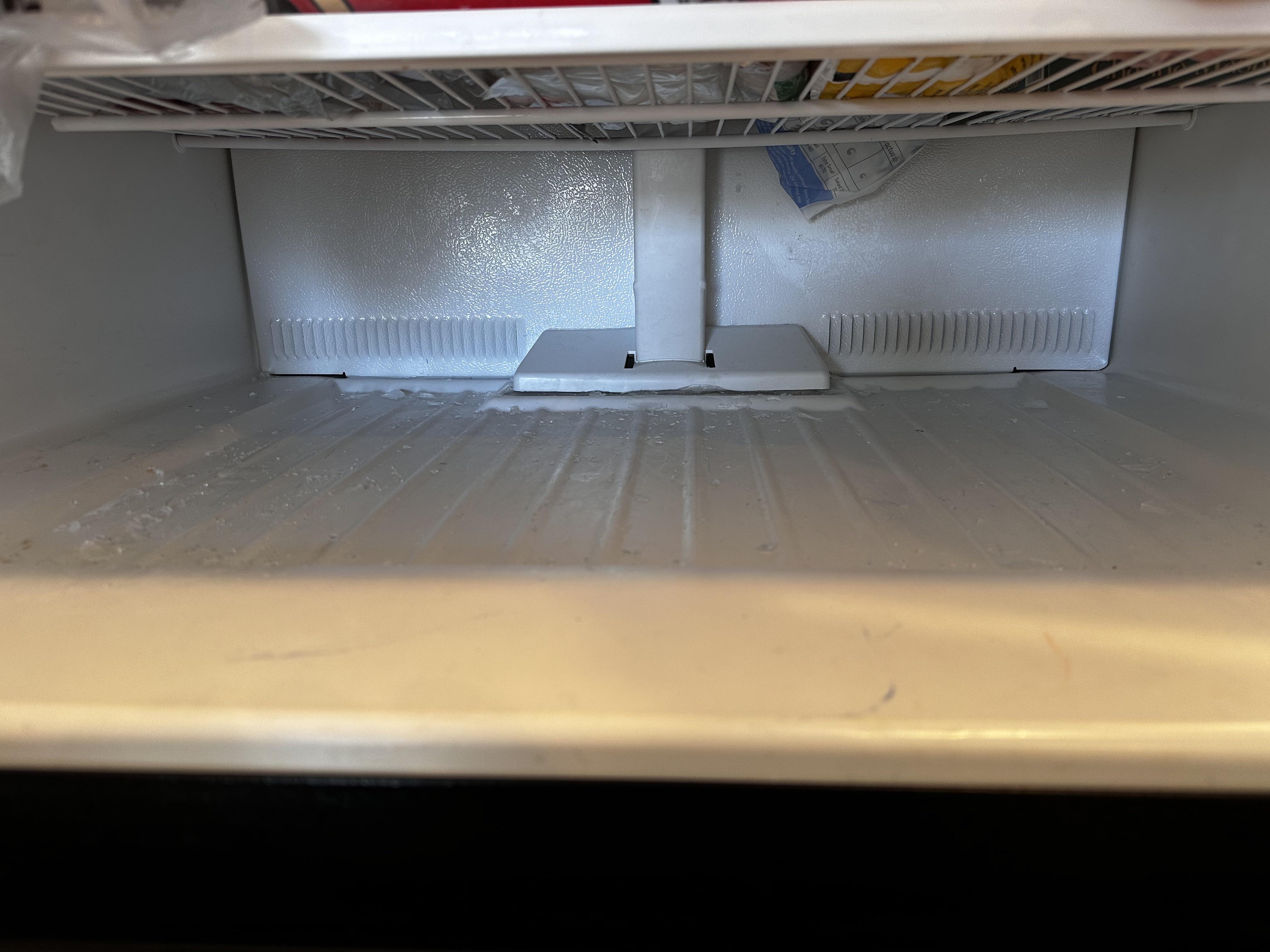
What the defrost drain does
Modern frost-free refrigerators melt frost off the evaporator coils during a defrost cycle. That meltwater is supposed to run into a small drain hole, travel down a tube, and end up in a drain pan underneath the fridge where it evaporates.
When the drain clogs, the meltwater has nowhere to go. It backs up and shows up as:
- Water under the crisper drawers (common in top-freezer and side-by-side models)
- Ice sheet on the freezer floor (common in bottom-freezer models)
- Dripping or refreezing near the back wall
- Musty smell if slime and food particles are involved
What causes the clog? A mix of ice (from slow draining water refreezing), plus gunk like crumbs, spilled juice, pet hair, and that mysterious black slime that seems to exist purely to ruin your Saturday.
This is not your AC drain
Quick clarification, because the word “drain” sends people down the wrong rabbit holes.
Refrigerator defrost drain
- What it carries: clean-ish defrost meltwater
- Where it goes: usually to a drain pan under the fridge
- Typical fix: melt ice and flush the tube with hot water
AC condensate drain line
- What it carries: water condensed from indoor air
- Typical clog: algae and biofilm
- Typical fix: wet-dry vac and manufacturer-approved cleaning method
Kitchen sink drain
- What it carries: greasy wastewater and food debris
- Typical clog: grease buildup and food
- Typical fix: clean the trap or snake the line
The fridge drain is its own little system. Typically there’s no P-trap, no sewer gas concerns, and no reason to dump harsh chemicals into it.
Before you start
You can do most of this with stuff you already have.
- Turkey baster, large syringe, or squeeze bottle
- Hot water (not boiling)
- A little dish soap
- Baking sheet or towels to catch water
- Pipe cleaner, zip tie, or soft flexible brush (nothing sharp)
- Hair dryer or bowl of hot water for melting ice (optional)
- ¼-inch nut driver or screwdriver (only if a panel needs to come off)
- Wet-dry shop vac (optional but very handy)
Safety first Unplug the refrigerator or switch it off at the breaker before removing freezer panels or working near the evaporator area. And never chip ice with a knife or screwdriver. Puncturing a refrigerant line can total the appliance.
Clean the drain from inside
1) Confirm it’s the drain
Pull the crisper drawers out and look for water pooled at the bottom of the fresh food compartment, especially near the center back. If you have a bottom-freezer, check for a slab of ice under the freezer basket.
If your fridge has a water dispenser or ice maker, also look for signs of a supply line leak. A defrost drain problem often shows up at the bottom inside, but depending on your fridge’s layout it can also end up dripping out to the rear or underneath if the pan overflows.
2) Find the drain hole
The drain is usually:
- In the freezer, at the bottom of the back wall behind a panel (common)
- In the fresh food section, at the back near the bottom under a cover (some models)
Remove shelves, bins, and drawers as needed. If there’s a rear panel, it’s typically held with a few screws.
If you can’t spot the drain, grab your model number from the sticker inside the fridge and look it up in the owner’s manual or a parts diagram. Searching your model number plus “defrost drain location” is often the fastest shortcut.
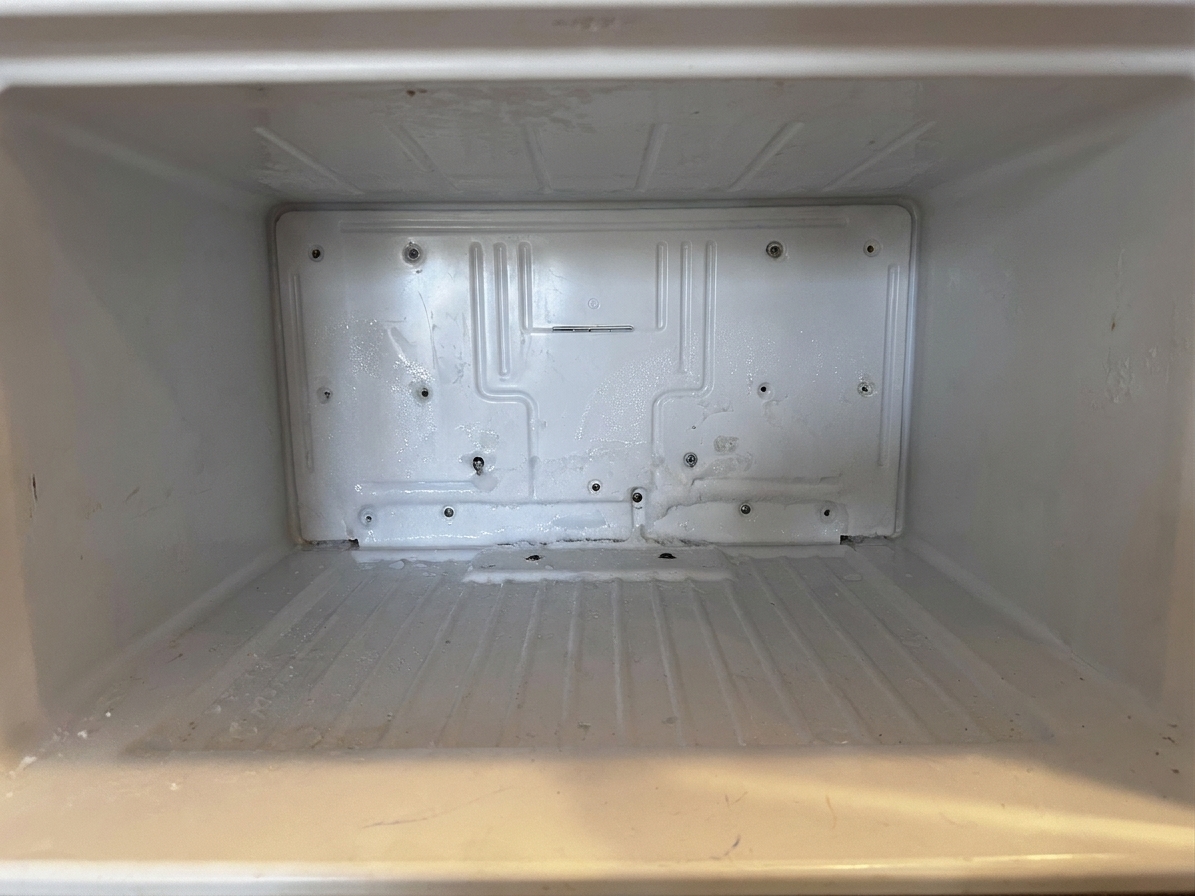
3) Melt ice blocking the drain
If you see ice around the drain trough or hole, melt it gently:
- Best: lay towels down and pour small amounts of hot water into the trough
- Also works: use a hair dryer on low, moving constantly
Your goal is to open the hole so water can enter the drain, not to fully defrost the freezer.
4) Flush with hot soapy water
Mix hot water with a few drops of dish soap. Use a turkey baster or squeeze bottle to forcefully push water into the drain hole. Do a few rounds.
What you’re looking for:
- The water level in the trough goes down quickly
- You hear water trickling down the tube
- The clog starts to break free (sometimes you’ll see cloudy water or bits of gunk come back up at first)
If it backs up immediately, you likely have a stubborn clog lower in the tube.
5) Work the clog gently
Use a pipe cleaner, a flexible drain brush, or a plastic zip tie to loosen the gunk. Feed it in a few inches, twist, pull out, and wipe. Then flush again with hot water.
Avoid anything rigid or sharp. The drain pan and tubing are plastic and easy to puncture.
6) Optional: vacuum from below
If you have a shop vac, you can often clear a nasty clog by vacuuming from the drain tube end near the drain pan underneath the fridge. More on accessing that below.
Clean the tube and pan below
If you keep flushing from the top but the clog returns, the tube can have slime buildup, or the drain pan can be gross enough to smell up your kitchen. While the compressor heat does most of the evaporating, a clean pan and clear airflow help it do its job normally.
1) Pull the fridge out safely
Unplug the fridge. Carefully roll it out.
- Protect your floor with a piece of cardboard, a thin plywood panel, or appliance sliders.
- If you have an ice maker or water dispenser, be mindful of the water line so you don’t kink it or put it in a tug-of-war it didn’t sign up for.
Most refrigerators have a drain pan:
- Underneath at the back (often accessible with a lower rear cover panel)
- Underneath at the front behind the toe kick (less common)
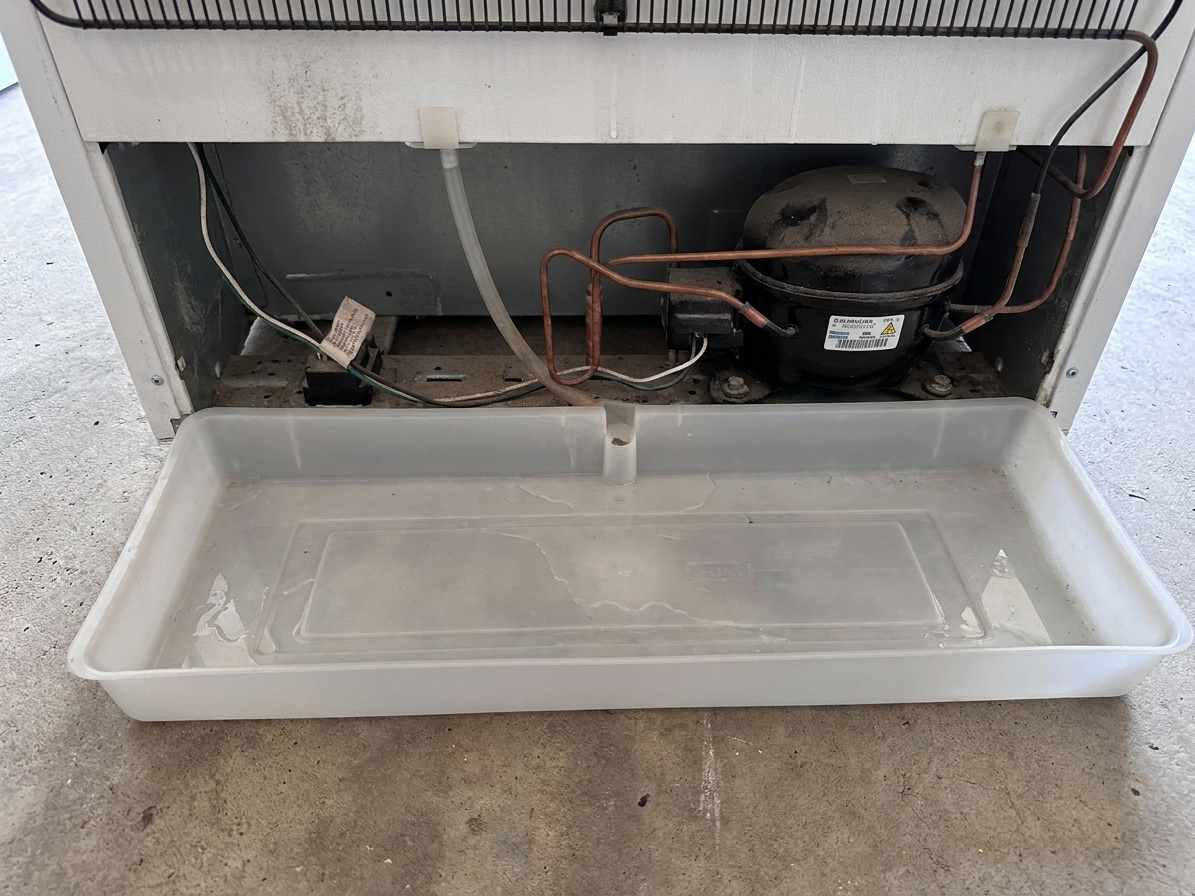
2) Find the tube end
You’ll typically see a rubber or plastic tube ending above the pan. Some models have a rubber “duckbill” check valve on the end designed to reduce warm air moving up the tube. That duckbill is a very common clog point.
If there’s a rubber tip, pinch it open and clean it. Slime loves that spot.
3) Clean the pan
Slide the pan out if it’s designed to remove. Some pans do not come out easily. In that case, wipe what you can reach.
- Wash with hot soapy water
- Rinse and dry
- Wipe surrounding dust and pet hair that can trap odors and block airflow
Once clean, do one more hot-water test at the drain opening inside the fridge or freezer, then watch below to confirm you get a steady drip into the pan.
If the drain freezes again
If you cleared the drain but it ices back up, you might have a slow drain situation where water lingers and refreezes.
Common reasons
- Partial clog still in the tube or duckbill
- Drain heater or heat probe issue (some models have a small heater or metal heat strap meant to keep the drain area open)
- Door seal leak letting in humid air that creates excess frost
- Freezer temp too cold (rare, but possible if settings got bumped)
Quick checks
- Gasket test: close the door on a dollar bill and tug. If it slips out easily, the seal may be compromised or the door needs adjustment.
- Airflow: do not pack items tight against the back wall. Blocked vents can cause weird icing patterns.
- Confirm drainage: after cleaning, pour a half cup of hot water into the drain. You should see it in the pan within a minute or two.
About that heater strap or heat probe: some are factory-installed and some are available as model-specific kits. Installation details vary a lot by brand and model, so this is one of those “check your manual or parts diagram before you get creative” situations.
When to call a pro If you cannot access the drain area without removing multiple panels and you see heavy ice buildup around the evaporator cover repeatedly, you could be dealing with a defrost system problem (heater, thermostat, or control). That’s beyond a simple drain cleaning.
Prevent future clogs
- Wipe spills quickly, especially sticky stuff that can migrate toward the drain area.
- Vacuum the fridge back once or twice a year. Dust and pet hair can end up everywhere, including around the drain pan.
- Keep food covered to reduce crumbs and drips.
- Do a yearly hot-water flush: a baster of hot water down the drain is cheap insurance.
Troubleshooting
Water under crisper drawers but freezer looks fine
Most likely a partially clogged drain that is backing up during defrost. Start by accessing the drain from inside and flushing.
Ice sheet on bottom of freezer
Classic clogged defrost drain. You will likely need to melt ice at the drain trough first, then flush.
Bad smell near the fridge
Check the drain pan underneath and the tube end. A slimy pan can smell even if the drain is technically working.
Leak near front corners
Make sure the fridge is level and the doors are closing fully. A tilted fridge can change how water flows during defrost, and a poor seal adds frost load.
FAQ
Can I use bleach in a refrigerator defrost drain?
I skip bleach in fridges unless the manufacturer specifically allows it. Hot water with a little dish soap handles most clogs. If you want a little extra help with biofilm, check your owner’s manual first and keep it mild. The big win is flushing thoroughly and not leaving strong fumes inside a food appliance.
How do I know the drain is clear?
Pour about 1 cup of hot water into the drain area. You should see it flow freely and show up in the drain pan underneath within a minute or two. If it backs up, gurgles, or drains painfully slowly, keep flushing and clean the tube end by the pan.
Where is the defrost drain on my model?
Locations vary, but it is almost always at the lowest point under the evaporator coil area. If you do not see it immediately, look for a rear interior panel in the freezer. Removing that panel usually reveals the drain trough and hole.
Is this related to my water filter or dispenser line?
No. The defrost drain handles defrost meltwater from the cooling system, not your filtered drinking water. They are separate systems with different failure patterns.