
Why Your Shower Backs Up When the Toilet Flushes
If toilet water rises in your shower only when you flush, the problem is usually a clog in the shared drain line, not hair in the shower. Here’s how to tell what’s happening and when to stop flushing and call a plumber.
Good grain. Great questions.
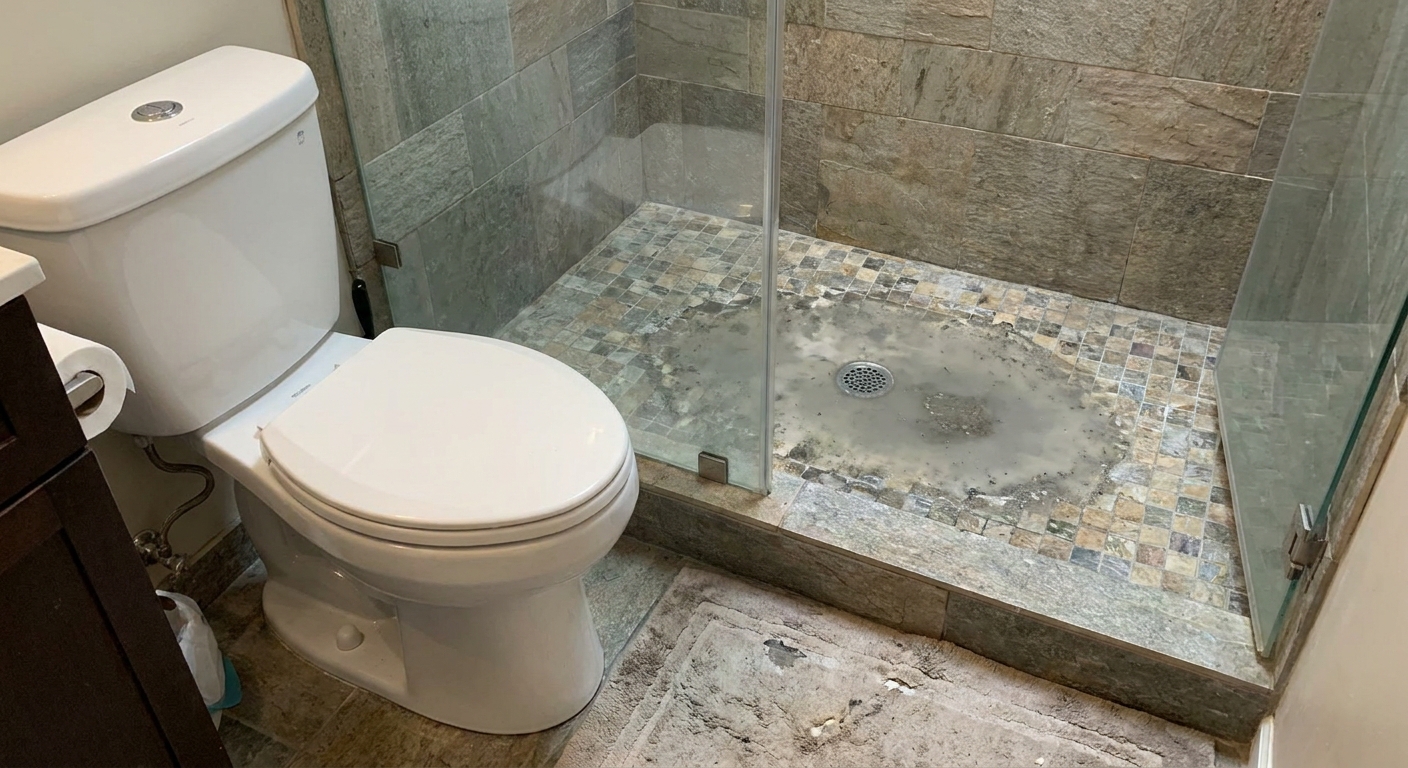
If your toilet flush makes water rise in the shower, your bathroom plumbing is sending you a very specific message: the toilet and shower share a drain path, and that path is restricted. When the toilet dumps a fast surge of water into the system, it has to move downstream quickly. If it cannot, that water can take the path of least resistance and show up at the lowest open point, which is often the shower or tub.
Let’s sort out what is normal, what is a clog, what is a venting issue, and what to do next without turning your bathroom into a science fair.
What’s happening when you flush
Most bathrooms are piped as a small network:
- Toilet (often 3-inch, sometimes 4-inch) ties into a bathroom branch line.
- Shower or tub (often 2-inch; sometimes 1 1/2-inch in older installs) ties into that same branch.
- That branch heads to a larger line, then out to the main sewer or septic.
When you flush, the toilet releases a quick, heavy volume of water. If the branch line is partially blocked, the flow cannot move downstream fast enough. The water level rises behind the restriction and can backflow into the next connected opening. Your shower drain is connected to the same branch, so the surge can push water back through the shower trap and up into the pan.
Key clue: If the shower backs up only during a flush, the toilet is not “backing up into itself.” The problem is usually after the toilet, where the lines join.
First call: Is it just hair?
Hair clogs are extremely common, but they behave differently.
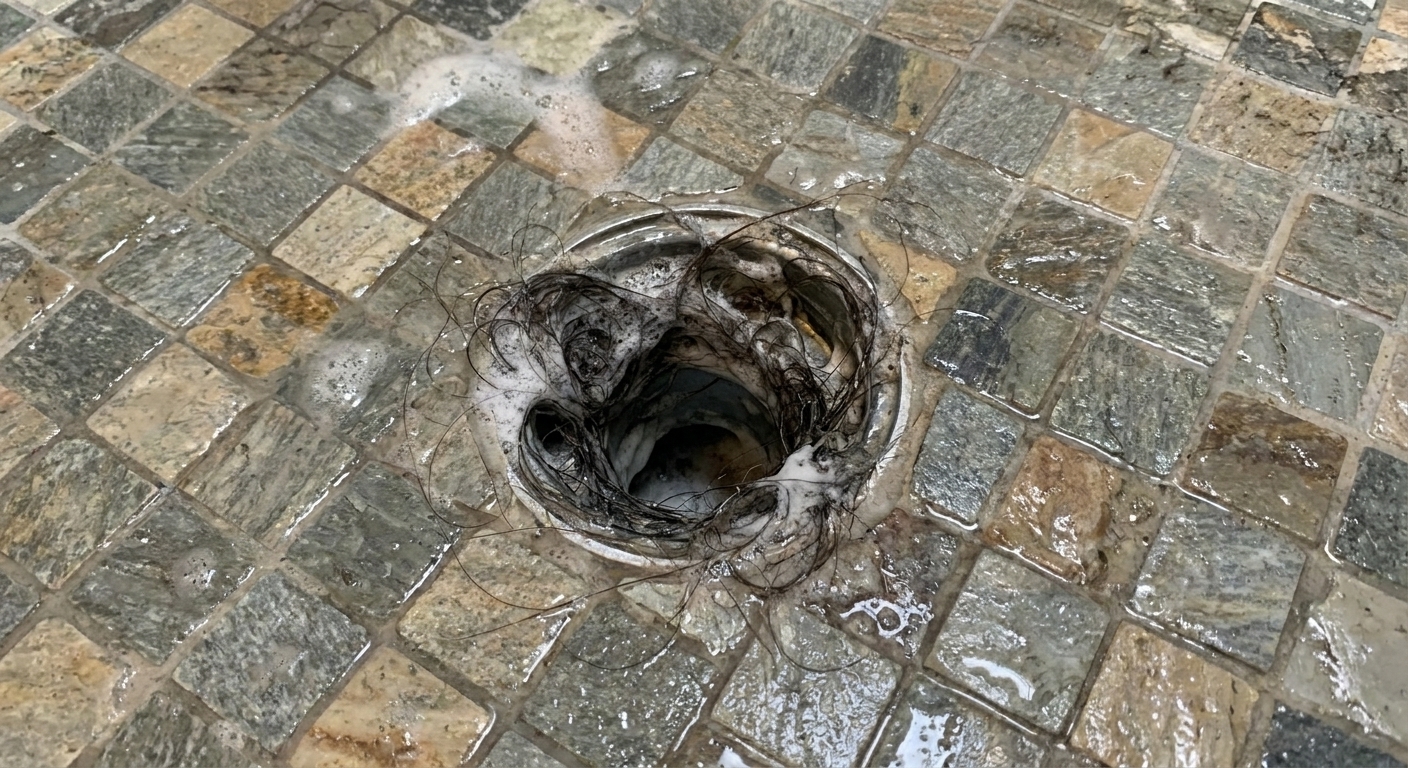
It’s probably just the shower strainer if:
- The shower drains slowly even when nobody flushes.
- You see standing water during a normal shower.
- Removing the strainer reveals hair and soap buildup right there at the top.
It’s probably not just hair if:
- The shower is mostly fine, but rises when the toilet flushes.
- You hear gurgling from the shower drain when the toilet runs.
- The toilet sometimes seems fine, but the shower becomes the “overflow spot.”
Hair at the strainer can be real, but toilet-to-shower backup means you should think shared branch line first.
Most common cause: Shared drain clog
This is the classic setup: toilet and shower meet in a branch line, and the restriction is somewhere after that connection. The toilet flush sends a large slug of water, the line cannot carry it away fast enough, and the shower becomes the easiest place for the water level to show itself.
Signs of a shared clog
- Shower backs up when the toilet flushes.
- Toilet may still flush, but it can act a little sluggish or burp air.
- Gurgling from shower or tub when the toilet drains.
- Sometimes the sink in the same bathroom is also slow, depending on how it is tied in.
Common blockage culprits (no judgment, just gravity)
- “Flushable” wipes that are not actually sewer-friendly
- Too much toilet paper repeatedly
- Soap scum and hair further down the branch
- Mineral scale (hard water) narrowing the pipe
- Older pipe bellies or offsets that catch debris
Important: Chemical drain openers are a risky bet here. If the line is blocked, chemicals can sit in the pipe and become a burn hazard for you or a plumber who has to snake it later. Mechanical clearing is usually the safer path.
Less common: Vent trouble
Sometimes the issue is not a clog, but poor venting. Your drains need air to flow properly. If the vent is blocked or the bathroom group is piped incorrectly, a flush can cause gurgling, trap siphonage, and inconsistent draining.
In many homes, the toilet and shower may be wet-vented, meaning the same pipe can serve as both a drain for one fixture and a vent for another, as long as it is done to code.
Worth keeping in mind: A vent problem by itself usually causes gurgles and slow or odd draining. Actual water coming up into the shower pan is far more often a blockage than venting alone.
Signs that point more toward venting
- You get gurgling often, even when drains are not obviously slow.
- The toilet flush causes the shower to gurgle but not necessarily overflow, at least at first.
- You notice sewer smell that comes and goes, suggesting trap water is being disturbed.
- Multiple fixtures act weird without a clear slowdown pattern.
What causes vent problems
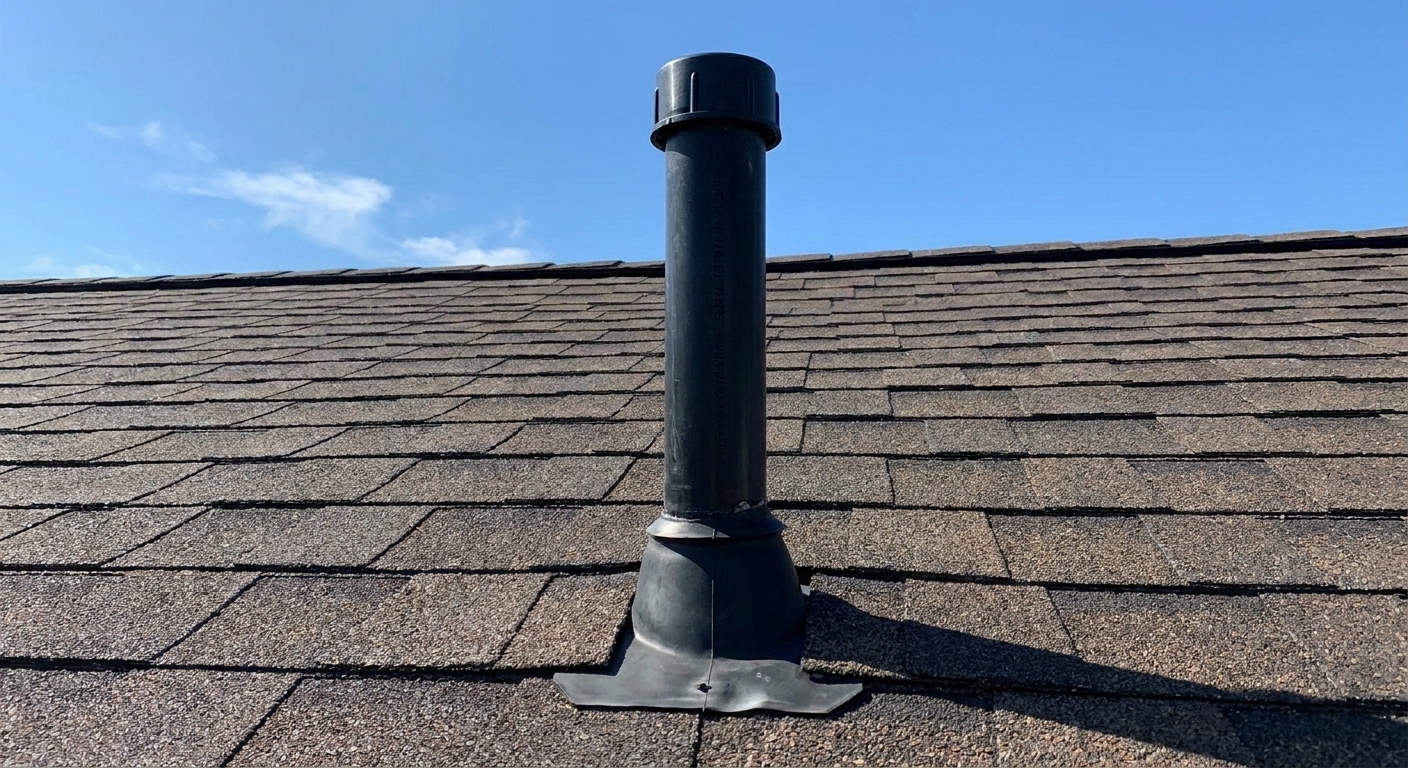
- A roof vent blocked by leaves, nests, or snow
- A failed or missing vent connection during a remodel
- An air admittance valve (AAV) that has failed, if your setup uses one
Venting problems can mimic clogs, but the simplest rule is still useful: clogs slow flow and cause backups, while vent issues mess with air and trap water, leading to gurgles and smells and inconsistent performance.
Quick checks in 10 minutes
Before you start taking anything apart, do these low-drama checks.
1) Watch the pattern
- Flush once. Watch the shower drain. Does water rise immediately?
- Run the shower for 30 to 60 seconds without flushing. Does it drain normally?
Flush causes backup is a branch-line clue.
2) Check the shower opening
- Remove the strainer.
- Pull out any hair you can reach.
- If you have standing water, note if it smells like sewage or just looks like soapy shower water.
If it smells like sewage and appears during toilet use, that supports the shared-line backup idea.
3) Try one more diagnostic
- Run the bathroom sink for a minute and watch the shower drain.
- If the shower rises or gurgles from sink flow too, that points to a branch line restriction.
- If multiple fixtures on the same level or the lowest level of the home are acting up, suspect a main line issue.
4) Listen for gurgling
- Flush and listen at the shower drain.
- Gurgling plus slow drainage is a classic downstream restriction.
When to stop flushing
Stop flushing if:
- Toilet water is entering the shower or tub.
- The shower pan is filling with dirty water.
- Any drain in that bathroom is near overflowing.
Every flush adds more water to a system that already cannot move it downstream. That means more backup, more contamination, and more cleanup.
If you need the bathroom in the meantime, use a different toilet in the house if you have one. If this is your only bathroom, it may be time to pause and call for help instead of forcing it.
Basic safety: If there is any chance you are dealing with sewage, keep kids and pets out of the area, wear gloves and eye protection, and plan on disinfecting surfaces after the problem is cleared.
Where the clog usually is
The whole trick is identifying whether the blockage is:
- Right at the shower drain (hair and soap near the top)
- In the bathroom branch (between shower and where the line heads out)
- Further downstream (past the bathroom, sometimes affecting other fixtures)
If only the toilet and shower are involved
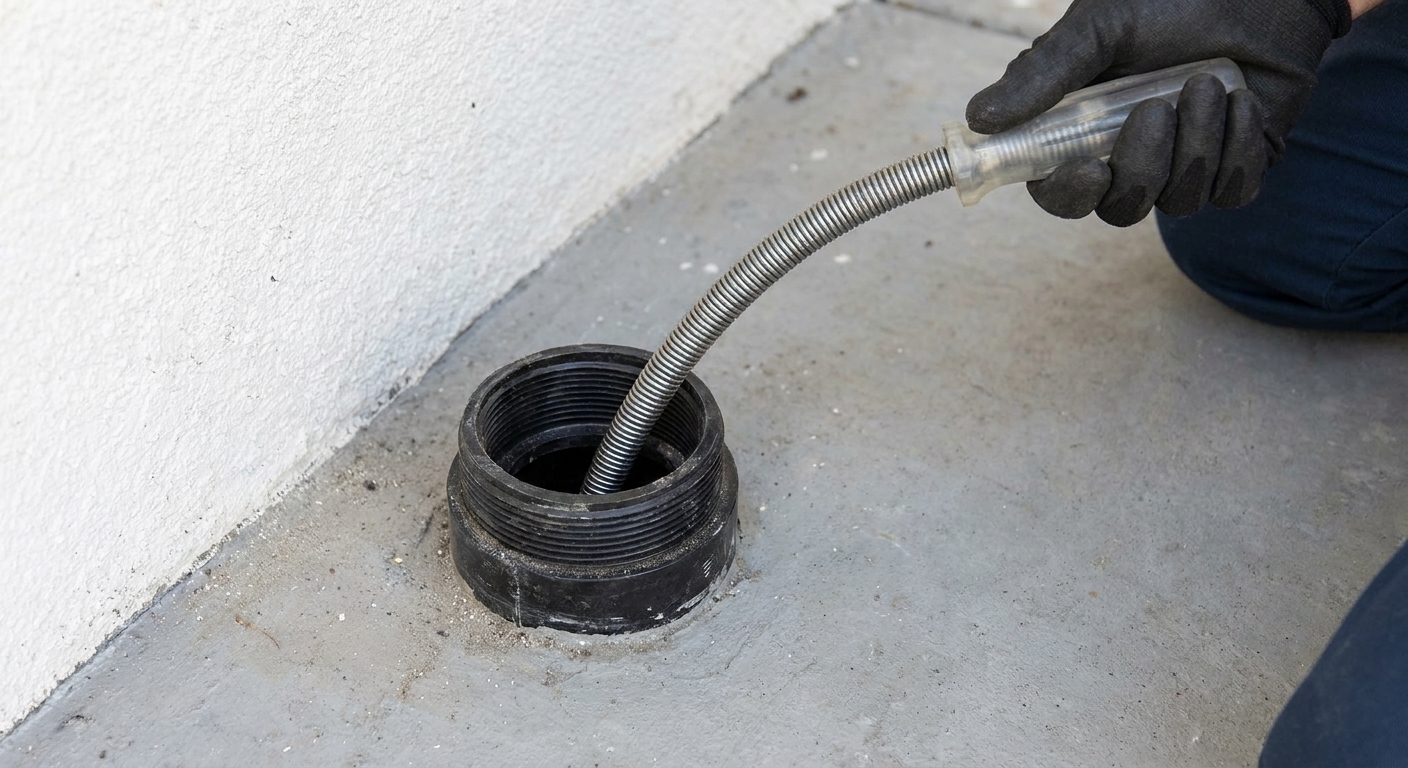
That often points to the bathroom branch line. The cleanout you need might be near the bathroom, in a wall access panel, basement, crawlspace, or outside where the line exits.
If other fixtures act up too
If sinks, tubs, or drains on the same level begin slowing or backing up, the blockage may be further downstream, closer to the main line. If the lowest fixtures in the house are affected, the odds tilt even harder toward the main.
Septic note
If you are on a septic system, a full tank or a saturated drainfield can look like a main-line backup. The symptoms can be similar: sluggish drains, gurgling, and backups at the lowest fixtures. If this is new and widespread, keep septic on your suspect list.
When it becomes plumber territory
If you cannot access a cleanout, if the clog returns quickly after clearing, or if multiple fixtures are backing up, you are likely dealing with a deeper obstruction that needs a drain snake or camera inspection.
What you can try safely
Safer DIY moves
- Clear the shower strainer and reachable buildup.
- Use a plunger on the toilet only if the toilet is also sluggish, and stop if flushing drives water into the shower.
- Use a hand snake on the shower drain if you can remove the strainer and feed the cable.
Mechanical removal beats chemical guesses, especially when you are not sure where the blockage sits.
Snaking cautions
- A small hand snake is great for short shower clogs, but do not expect it to clear a deeper branch or a main line.
- Go slow. Forcing a cable can damage older piping or push debris into a tighter spot.
- If the water you are seeing looks like sewage, DIY attempts can spread contamination fast. That is a good moment to stop and call it.
Moves I would skip
- Repeated flushing to “push it through.” That is how the shower becomes a biology project.
- Chemical drain openers in a suspected branch or main-line blockage.
- Shop vac on a toilet trapway unless you know exactly what you are doing. It can be messy and still not reach the real clog.
If you have a cleanout, use it
A cleanout provides a straight shot to the line that is actually clogged. If you can locate one (often a capped fitting on a larger drain line in a basement or crawlspace), that is usually where a plumber will start too.
When to call a plumber
Some situations are not worth wrestling with. Call in help if any of these are true:
- Sewage is backing up into the shower or tub.
- You have no accessible cleanout and the problem is clearly beyond the shower strainer.
- Multiple fixtures are involved, especially on the lowest floor.
- The clog clears and returns quickly, suggesting deeper buildup, a belly, roots, or a damaged pipe.
- You suspect a vent issue and the home layout or remodel history is unclear.
A plumber can snake from the correct direction and, when needed, use a camera to confirm whether you are dealing with a simple obstruction or a pipe issue that will keep coming back.
If there was a significant sewage overflow, professional cleanup can be worth it. Getting the line open is step one, but sanitation is step two.
FAQ
Why does it only back up when the toilet flushes?
Because a flush sends a large surge into the drain. If the shared line is restricted, that surge cannot move downstream quickly enough, so the water level rises and can show up through the shower drain.
Is it dangerous to keep using the toilet?
Yes, if toilet water is entering the shower or tub. That is a sanitation issue, and each flush can make the overflow worse. Stop flushing and address the clog.
Could it be the toilet itself?
If the shower is involved, the blockage is usually not inside the toilet trapway. It is typically in the drain line after the toilet connects to the branch.
How do I tell vent trouble from a clog?
Venting problems often cause gurgling and trap disturbance (sometimes sewer smell) without a consistent slow-drain pattern. A clog more reliably creates slow drainage and backup, especially during high-flow events like a flush. If water is rising into the shower pan, bet on a restriction first.
The takeaway
When a toilet flush makes the shower back up, your shower is not being dramatic. It is being honest. The most likely issue is a clog downstream in the shared bathroom branch, not hair at the shower strainer and not venting. Start with simple observation, stop flushing if dirty water shows up, and focus on shared-line access and cleanouts. If multiple fixtures are involved or you cannot reach the clog safely, it is time to bring in a plumber with the right tools.