
How to Cover a Window Air Conditioner for Winter
Keep cold drafts and moisture out by sealing and covering a window or through-wall air conditioner for winter. Step-by-step tips for side panels, breathable covers, and sleeve units.
Good grain. Great questions.
If you have a window air conditioner, winter can turn it into a sneaky little draft machine. The goal is not to mummify the whole unit. It is to block wind, stop air leaks around the sides, and keep moisture from setting up camp where it should not.
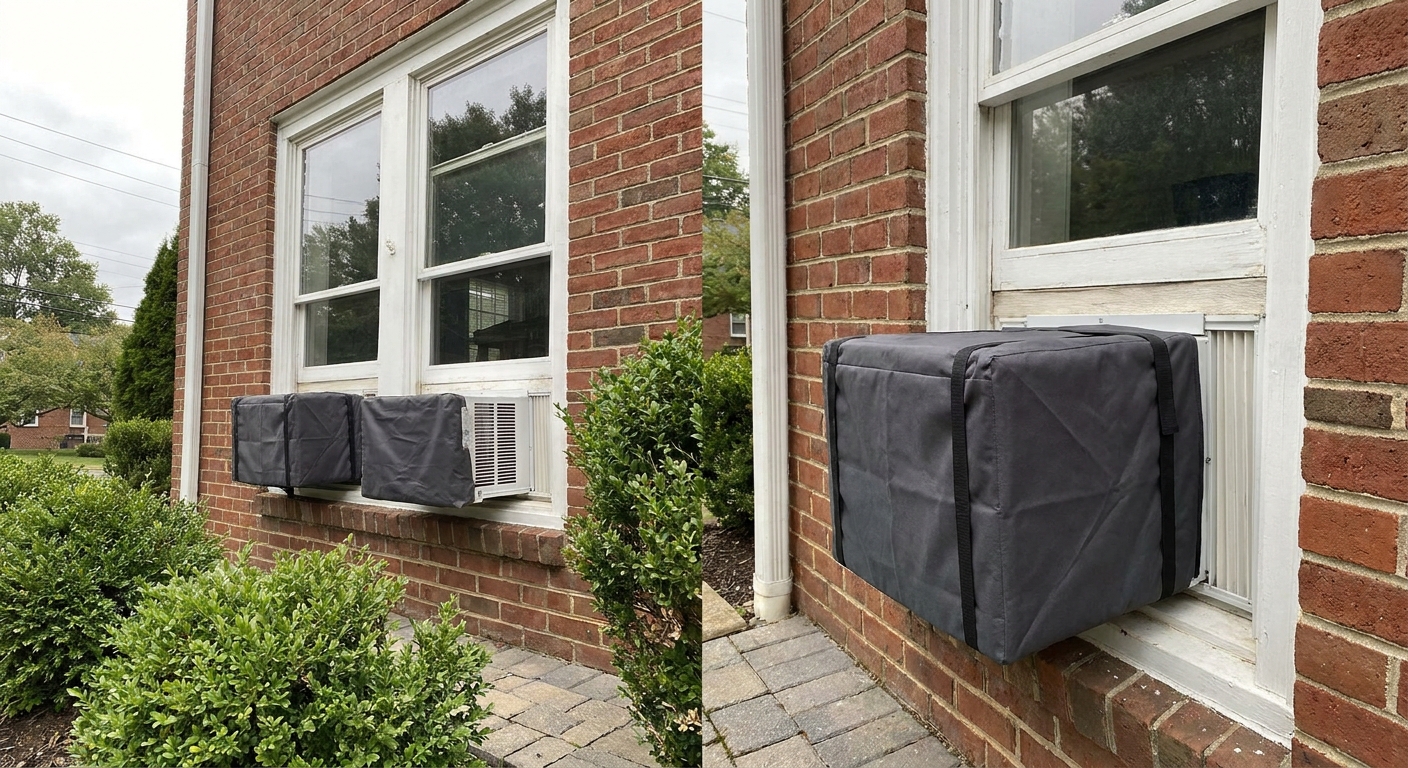
Before you cover it
Check the manual first
Before you add any cover or seal, take a quick look at your owner’s manual (or the manufacturer site) for off-season storage notes. A few models have specific guidance on covers, drainage, and how the chassis should sit.
Know what you have
- Window unit in a sash: sits in a double-hung window opening with accordion side panels.
- Through-wall sleeve unit: slides into a metal sleeve built into the wall (common in apartments and older buildings).
Grab your materials
- Foam weatherstripping (adhesive)
- Rope caulk (removable, renter-friendly)
- Foam backer rod (for deeper gaps)
- Rigid foam board (for big, flat gaps)
- Window lock or a snug dowel (to keep the sash from creeping)
- Breathable outdoor AC cover (optional, for weather exposure)
Pick a dry day and do a quick clean
Turn the unit off and unplug it. If your manual recommends a fan-only dry-out cycle, run fan for a few minutes to help clear residual moisture, then shut it fully off and unplug before you cover anything. Wipe the front grille and the top of the unit so you are not sealing in dust and damp.
Also check the filter. If it is washable, clean it, let it dry completely, then reinstall. A damp filter left in place all winter can get funky.
Safety note: If your unit is hardwired, do not tug on wiring or open electrical covers. Use the disconnect or breaker if needed, or get help from maintenance or an electrician.
Do you need a cover?
Covering helps most when your unit stays installed all winter and you deal with:
- Noticeable cold drafts around the unit or side panels
- Wind-driven rain or snow that hits the unit directly
- A unit mounted in a spot that gets lots of weather exposure
If you can remove the unit and store it indoors, that is usually the best draft stopper. But plenty of setups are heavy, awkward, or not meant to move every season. In that case, a good seal plus a smart cover is the next-best play.
One nuance: an exterior cover can reduce wind and keep snow off the cabinet, but a bad cover can also hold moisture against metal. Breathable fabric beats fully sealed plastic every time.
Window units in a sash
1) Shut the window down tight
Lower the sash until it firmly rests on the unit. If there is a gap where the sash meets the top of the AC, fill it with a strip of foam weatherstripping or a purpose-cut piece of rigid foam.
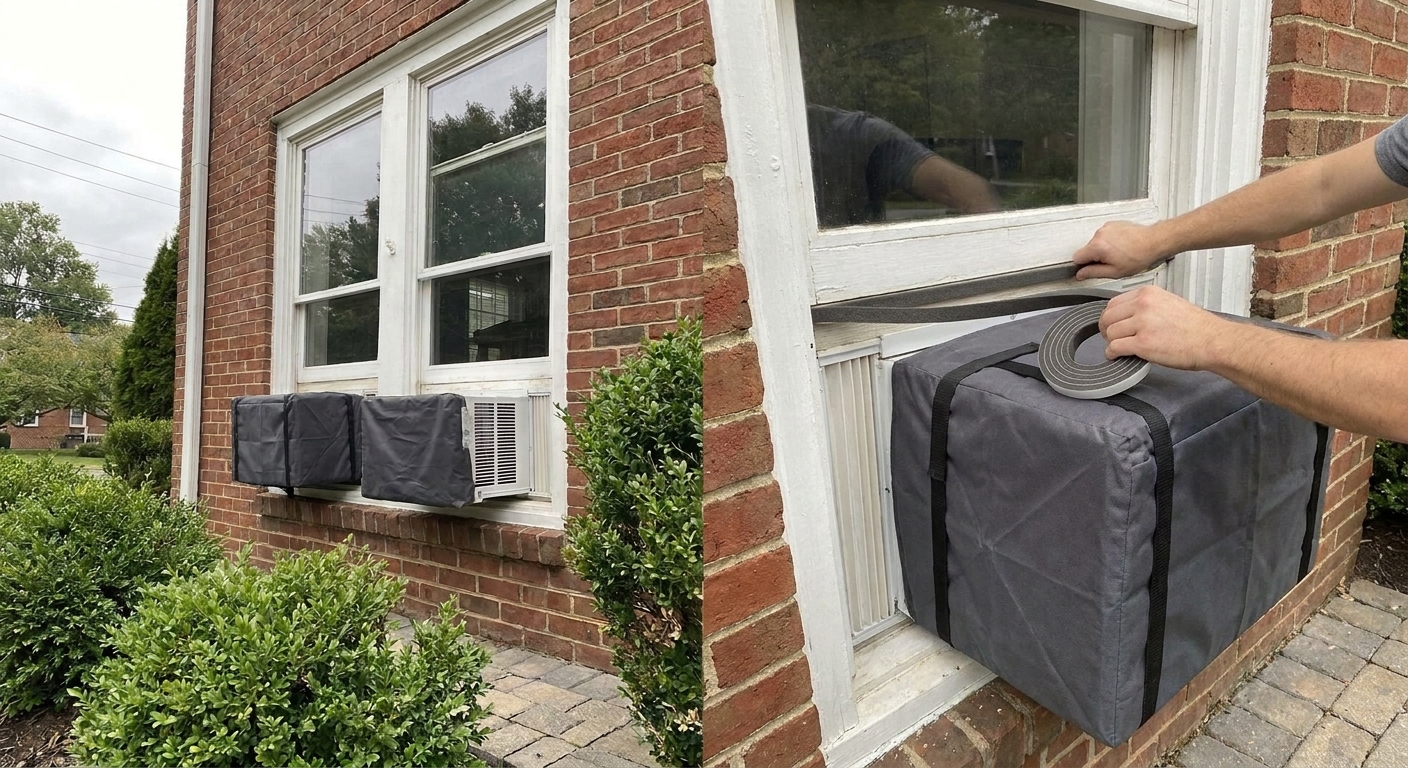
2) Lock the window
Even a small opening can make a big draft. Use a window lock, a snug dowel, or another stop that fits your window style so the sash stays pressed down.
3) Seal the side panels
Translation for the no-nonsense crowd: you are trying to stop airflow through the accordion panels and their edges, not glue anything permanently shut.
The accordion panels are usually the leakiest part. Check both the edges and the tracks:
- At the panel-to-frame seam: add removable foam weatherstrip or rope caulk where air is moving.
- At the panel-to-AC seam: make sure the panel is fully expanded and secured, then seal any gaps.
- At the sill: fill any voids under the unit with foam backer rod or a snug piece of foam.
If your panels are cracked or warped, consider replacing them or building a simple rigid foam insert to sit between the panel and the window frame.
4) Add an outdoor cover (optional)
An outdoor cover is mainly about blocking wind and shedding snow and rain off the exterior portion of the unit. The tradeoff is moisture: a cover that stays wet or traps water against the cabinet can speed up corrosion. Choose a cover designed for AC units, ideally a breathable fabric type.
- Pull the cover over the outside portion only.
- Fasten it snugly so wind cannot flap it around.
- Set it up to shed water, not collect it.
- Do not tape plastic around the whole chassis. That is how you trap condensation.
Tip from the bench: If the cover is loose, it will rattle all winter and eventually tear. A snug fit is quieter and lasts longer.
Indoor draft control
If your main complaint is a cold room, the most important “cover” is actually inside: stopping air exchange around the unit.
Quick indoor options
- AC insulating side panels (the quilted kind) that stick around the unit and panel edges
- Rigid foam board cut to fit above the unit or in wide side gaps
- Clear window shrink film over the entire window area (only if you will not need the window until spring)
Use removable materials if you are renting or if you plan to run the unit on occasional warm days.
If you have a window heat pump unit or you expect to use heat mode in shoulder season, do not cover it until you are truly done running it. A cover plus a surprise warm day is a recipe for headaches.
Through-wall and sleeve units
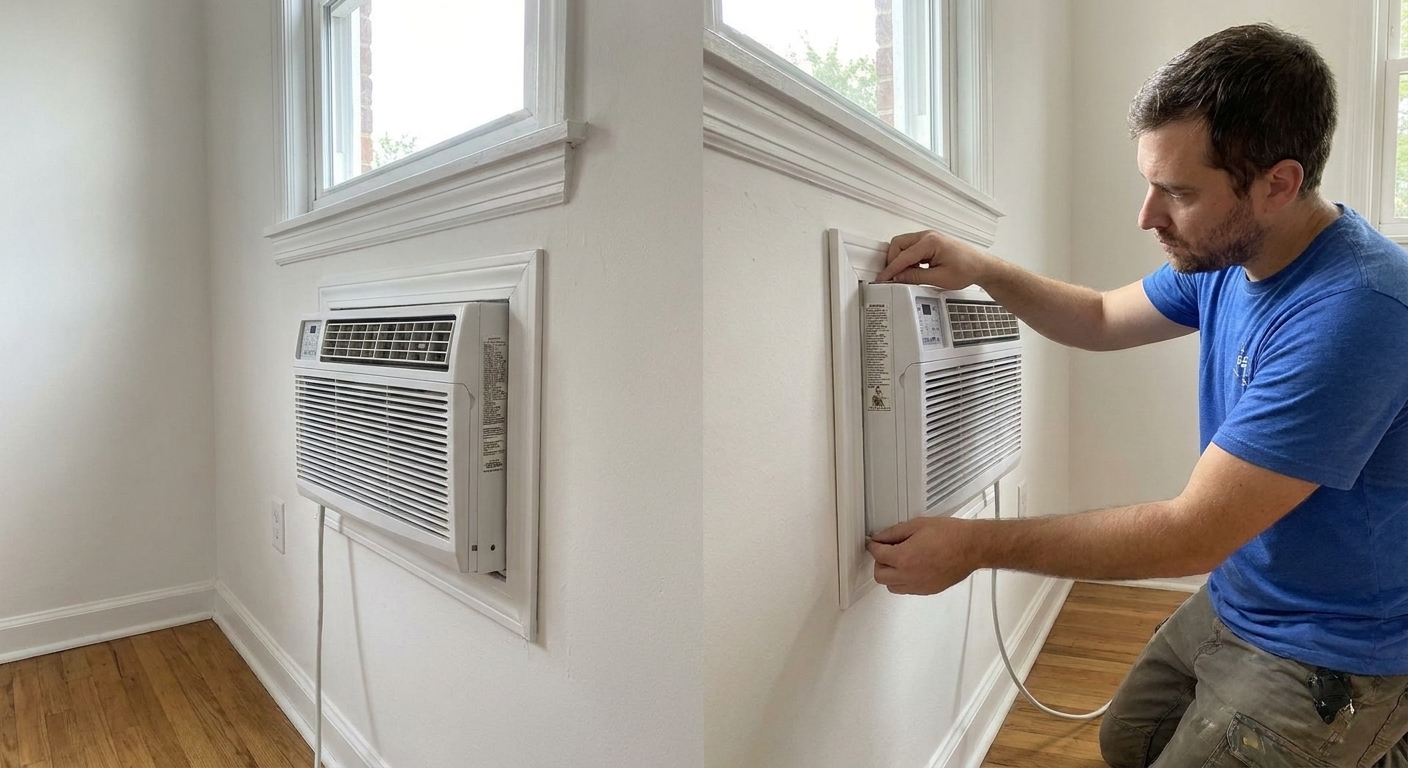
Through-wall units are drafty for a different reason: air can leak around the metal sleeve or around the unit’s chassis where it meets the sleeve.
1) Check trim and perimeter
Inside, look at the trim ring or front frame. If you feel cold air at the edges, you likely have a gap between:
- the sleeve and the wall opening, or
- the AC chassis and the sleeve
2) Seal gaps with the right material
- Small, removable gaps: rope caulk is tidy and renter-friendly.
- Medium gaps: foam backer rod plus removable caulk can work well.
- Bigger, permanent gaps: you may need proper air sealing and insulation around the sleeve, which can mean opening trim. If you are not sure, call building maintenance.
Do not block weep or drain paths. Sleeve systems often rely on drainage routes so water can exit. Some sleeves also have a specific rear tilt or drain provision. Do not alter the tilt, and do not seal any openings that are meant to drain.
3) Consider an interior cover
If the unit stays installed and you feel a steady draft, an interior AC cover (a fitted fabric cover that goes over the room-side front) can reduce air movement. Make sure the unit is fully off before covering, and do not cover a unit you plan to operate.
What not to do
- Do not wrap the unit in airtight plastic so tightly that moisture cannot escape. Trapped condensation can lead to mildew and rust. A breathable outdoor cover is different than sealed plastic wrap.
- Do not seal the exterior so water pools on top of the cover or around the unit.
- Do not stuff fiberglass insulation into areas where it can get wet or interfere with moving parts or drainage. Use closed-cell foam products for drafts.
- Do not forget pests. If you have gaps, mice will find them faster than you can say “weatherstrip.” Seal first, cover second.
Checklist
- Check manual for any cover or storage notes
- Unplug or safely shut off power
- Clean and dry accessible surfaces and the filter
- Close the sash tight and lock it
- Seal top gap and side panel leaks
- Add an outdoor cover if exposed to weather, preferably breathable
- For sleeve units, seal around the chassis and sleeve without blocking drainage or changing tilt
FAQ
Should I remove my window air conditioner for winter?
If you can remove it safely and store it somewhere dry, that is usually the best way to eliminate drafts. If it is heavy, awkward, or not designed for seasonal removal, sealing and covering in place is a solid alternative.
Will an outdoor cover cause rust?
It can if it traps water or stays wet against the unit. Choose a cover designed for AC units, aim for breathable fabric, secure it so it does not flap, and avoid fully sealing the unit in non-breathable plastic.
Why is cold air still coming in after I covered it?
The usual culprits are the accordion side panels, the top sash gap, or air leaks around a through-wall sleeve. Focus on air sealing indoors first. The outdoor cover is helpful, but it cannot fix a leaky interior perimeter.
Can I use shrink film over the whole window with the AC installed?
You can, as long as the film can span the full window area without tearing on sharp edges. It is best for setups where you will not operate or access the window until spring.