A step-by-step homeowner guide to sealing and insulating an attic hatch using weatherstripping, rigid foam, and simple latch adjustments for a tight, easy-to...
The Homeroom Fix
October 25, 2026
•
By Marcus Delgado
How Much Attic Insulation Do You Need?
Find a common attic insulation R-value target by climate zone, then convert inches of fiberglass or cellulose into estimated R so you can tell if your attic is short.
When I’m helping a neighbor figure out why their house feels drafty in winter, the conversation usually ends up in the attic. Not because attics are fun places to hang out (they are not), but because an under-insulated attic is one of the most common, fixable causes of high heating and cooling bills.
This article is about one question: Is my attic insulation thick enough? We’re going to set an R-value target based on your climate zone, then do some quick math to estimate the R-value you already have from the inches sitting on your attic floor.
What R-value means
R-value is a measure of how well insulation resists heat flow. Higher R means better insulating performance. In a typical vented attic with insulation on the attic floor, the goal is to build enough R-value on top of the ceiling drywall to slow down heat loss in winter and heat gain in summer.
Two quick clarifiers that matter for real homes:
- Depth is not the same as R-value. Ten inches of one material can perform very differently than ten inches of another.
- Settling is real. Loose-fill insulation (cellulose and blown fiberglass) can settle over time, especially older installations.
Attic R-value targets by climate zone
In the US, suggested attic insulation levels are usually tied to IECC climate zones (1 through 8). The table below reflects common recommendations and upgrade targets you’ll see from programs like ENERGY STAR and the DOE for existing homes, plus what many contractors aim for in practice. It is not a promise that your local code uses the same numbers, and local amendments can differ.
| Climate Zone | Common target range (attic floor) |
|---|---|
| Zone 1 | R-30 to R-38 (R-49 as an upgrade target) |
| Zone 2 | R-30 to R-38 (R-49 as an upgrade target) |
| Zone 3 | R-38 to R-49 (R-60 as an upgrade target in some homes) |
| Zone 4 | R-49 to R-60 |
| Zone 5 | R-49 to R-60 |
| Zone 6 | R-49 to R-60 |
| Zone 7 | R-49 to R-60 |
| Zone 8 | R-49 to R-60 |
My Michigan perspective: Most of Michigan is Zone 5, and I generally treat R-49 as the practical “bare minimum” target for an attic floor. Lots of homes benefit from pushing closer to R-60, especially if the attic is easy to access and air sealing is decent.
If you are not sure of your climate zone, you can look it up using your ZIP code through your state energy office or the IECC climate zone map. (No need to overthink it. Being off by one zone usually does not change the “do I need more insulation?” conclusion.)
Estimate what you already have
Here’s the homeowner-friendly way to do this:
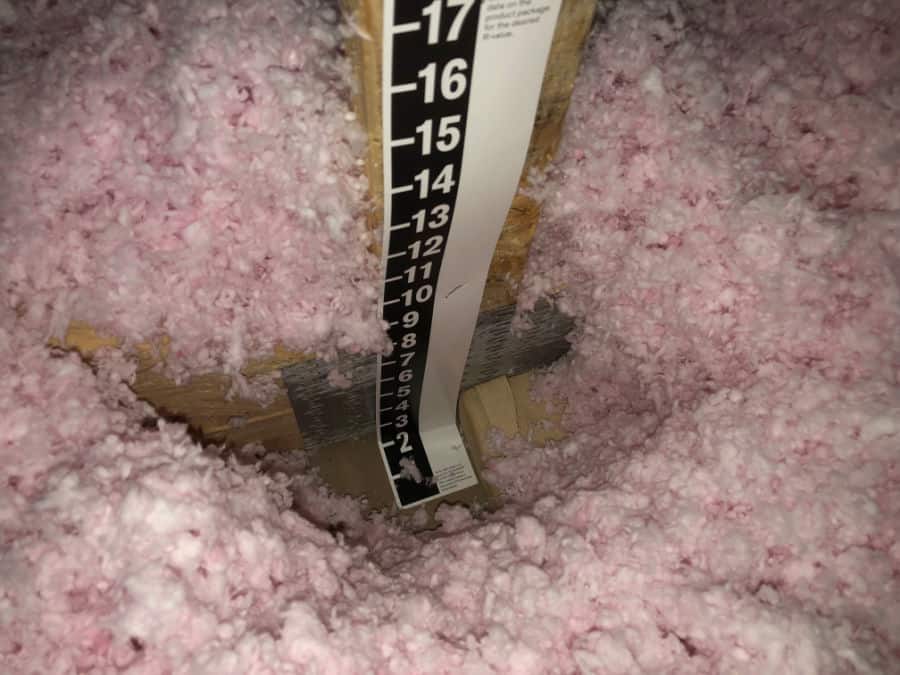
- Measure insulation depth in several spots across the attic, not just one place near the hatch. Write down both your average depth and your minimum depth. (Attics love to be uneven.)
- Identify the insulation type: fiberglass batt, blown fiberglass, or cellulose are the big three in most homes.
- Multiply inches by an approximate R per inch using the ranges below.
R per inch (rule of thumb)
These are intentionally approximate. Installed density and product type matter, and different brands can vary. If you can find the bag chart from the insulation you have (or a manufacturer card stapled to a rafter), that is the most accurate DIY way to confirm installed R-value.
- Loose-fill cellulose: about R-3.2 to R-3.8 per inch
- Loose-fill fiberglass: about R-2.2 to R-3.0 per inch (some products and densities land higher than the low end)
- Fiberglass batts: about R-2.9 to R-3.3 per inch (varies by batt type and how well it is installed)
Quick math examples:
- 10 inches of cellulose is roughly R-32 to R-38.
- 10 inches of blown fiberglass is roughly R-22 to R-30.
- 12 inches of fiberglass batts is roughly R-35 to R-40.
Use this as a first-pass decision tool. If you’re on the fence, go by the bag chart or have an energy audit confirm what you actually have.
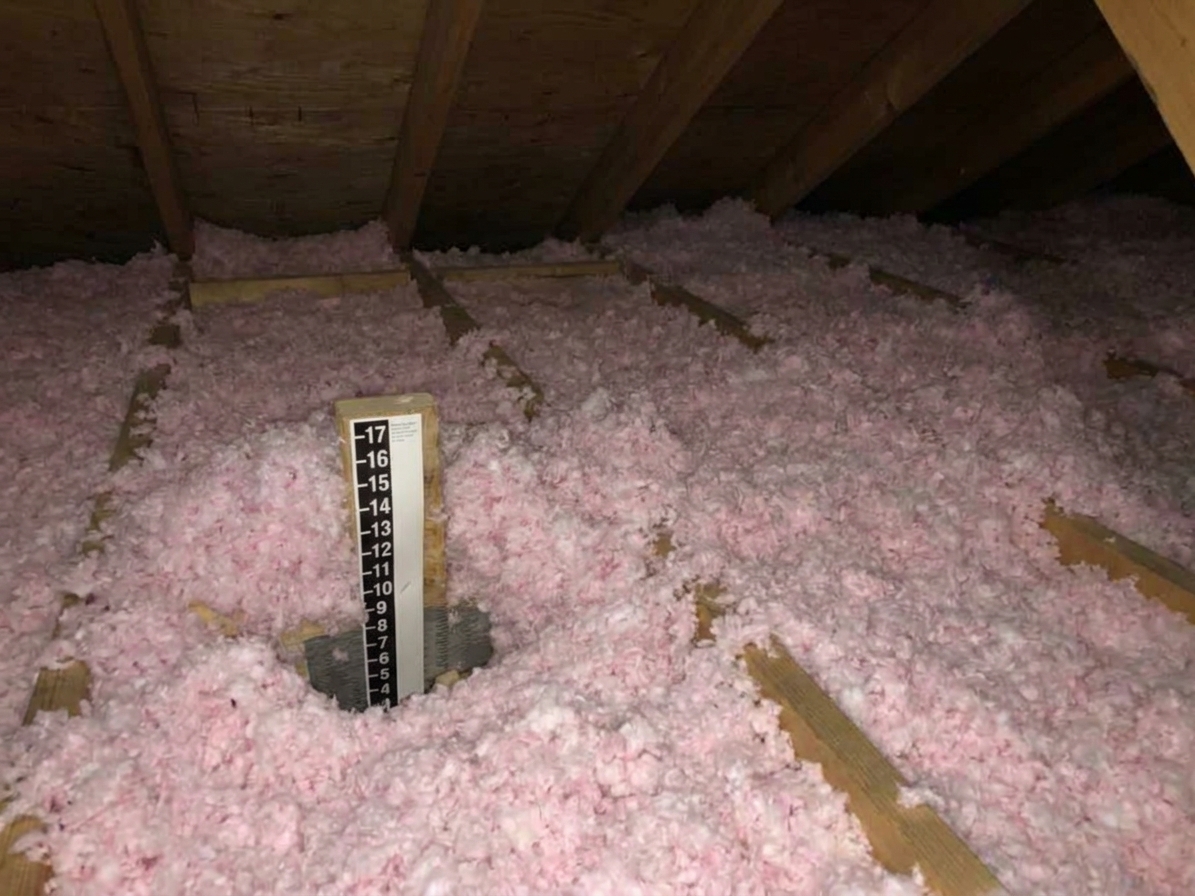
Cheat sheet: depth to R
If you want a fast gut-check, use these ballpark conversions. (Again, estimates. Helpful, not perfect.)
| Depth on attic floor | Cellulose (approx) | Blown fiberglass (approx) |
|---|---|---|
| 6 inches | R-19 to R-23 | R-13 to R-18 |
| 8 inches | R-26 to R-30 | R-18 to R-24 |
| 10 inches | R-32 to R-38 | R-22 to R-30 |
| 12 inches | R-38 to R-46 | R-26 to R-36 |
| 14 inches | R-45 to R-53 | R-31 to R-42 |
| 16 inches | R-51 to R-61 | R-35 to R-48 |
What most people discover: If your attic has older blown fiberglass that looks like a thin, sparkly gray blanket and it measures 6 to 10 inches, you are probably well under today’s common targets in Zones 4 through 8.
Are you short of the target?
Once you’ve got (1) your climate-zone target and (2) your estimated current R-value, you can decide where you stand:
- If you’re within about 10 R of the target: you’re in “pretty good” territory. You may still benefit from topping up, but it is not an emergency.
- If you’re 15 to 30 R below target: that’s a very common situation, and adding insulation usually pays off in comfort.
- If you’re 30+ R below target: you’re basically running the house with a winter hat that barely covers your ears. Big opportunity.
Do not ignore low spots
Attic insulation is rarely uniform. If you measure 14 inches in the middle but only 4 inches at the eaves, you do not really have a “14-inch attic.” You have a patchy attic. Heat flows disproportionately through the weak spots.
Record both average and minimum depth. Use the minimum readings as your reality check, then plan to fix those thin areas, not just the easy-to-reach middle.
Compressed insulation is weaker
I see this a lot in 1970s and 1980s attics: batts laid between joists, then someone stores boxes on plywood, or adds boards and smashes the batts down. That compression reduces performance because insulation needs trapped air pockets to do its job.
Also, insulation that is dirty or matted can be a sign of air movement through it (wind washing or air leaks from the house). That might not change the nominal depth-to-R math on paper, but it can absolutely reduce real-world performance until the air leaks are addressed.
Batts plus loose-fill on top
That is extremely common, and usually a good thing as long as everything is dry and you are not blocking ventilation at the soffits.
To estimate total R-value:
- Estimate the R-value of the batts (sometimes printed on the kraft facing or packaging if you find leftovers).
- Add the R-value of the loose-fill using depth times R per inch.
Example: If you have R-19 batts in the joists and 8 inches of cellulose on top (about R-26 to R-30), your total is roughly R-45 to R-49.
If you cannot identify the batts, you can estimate them by thickness:
- 3.5 inch batt is commonly around R-11 to R-15
- 6 inch batt is commonly around R-19
- 8 to 9 inch batt is commonly around R-25 to R-30
Before you add more insulation
This is not an install tutorial, but a quick reality check: in a lot of houses, air sealing the attic floor is the move that makes your insulation work like it is supposed to. If you are going to do one “prep” step before topping up, do this.
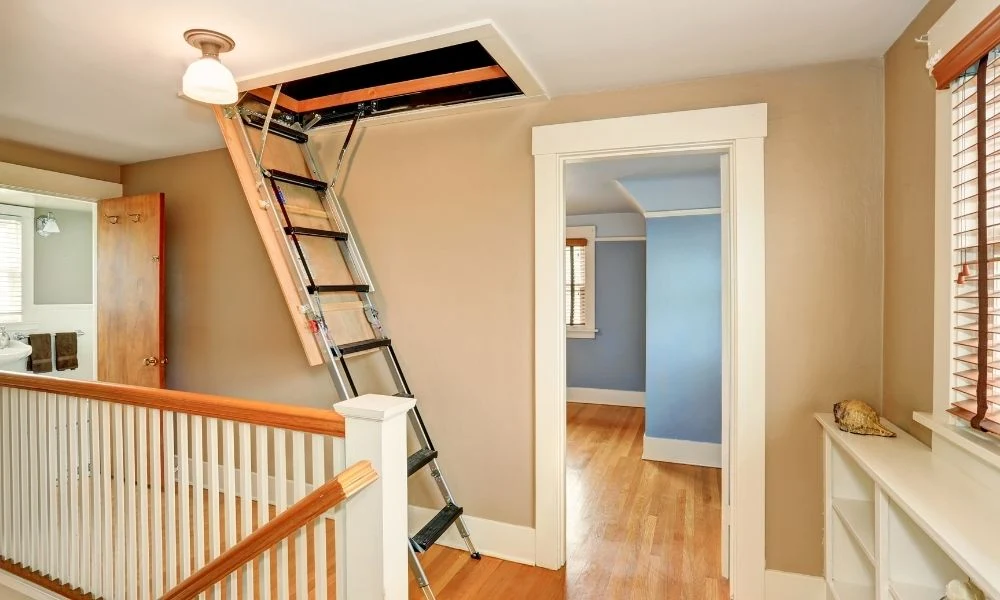
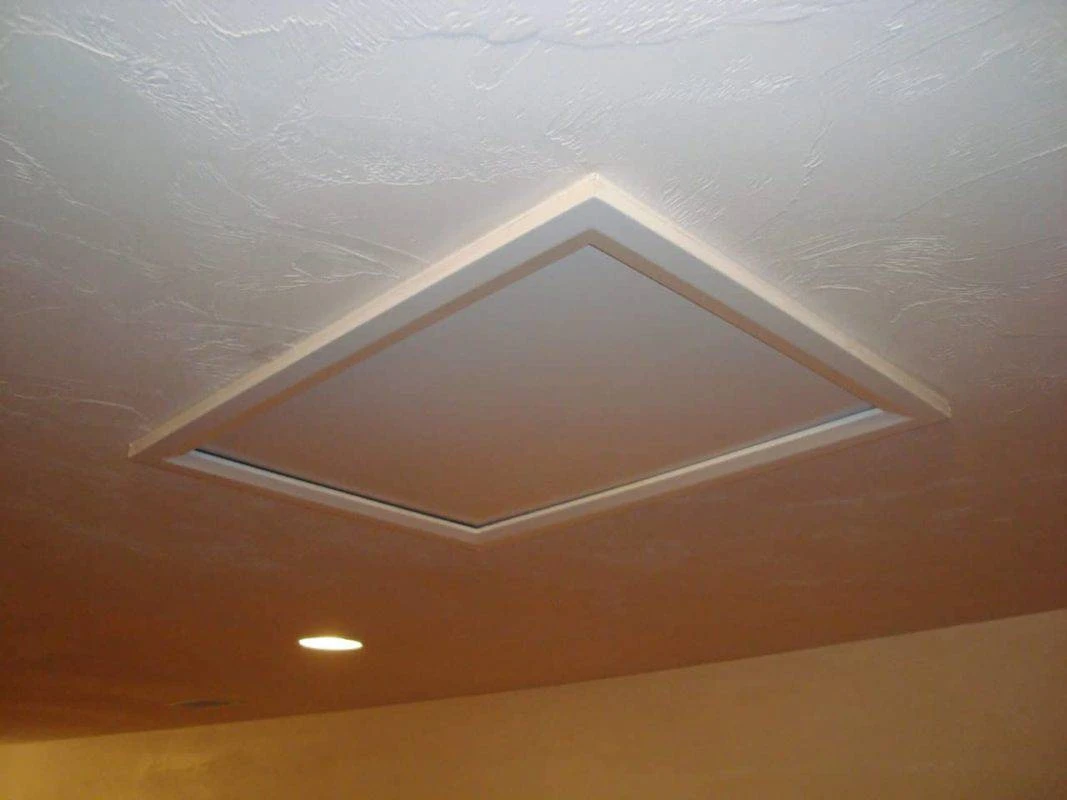
- Seal the attic hatch (weatherstrip it, and insulate the back of the cover).
- Seal plumbing and wiring penetrations (around stacks, vents, and cable runs).
- Seal open chases (soffits, dropped ceilings, duct chases).
- Check recessed lights (older non-IC cans can be a fire hazard if buried).
- Maintain clearance to hot flues (chimneys, B-vent, metal flues) using approved methods and clearances.
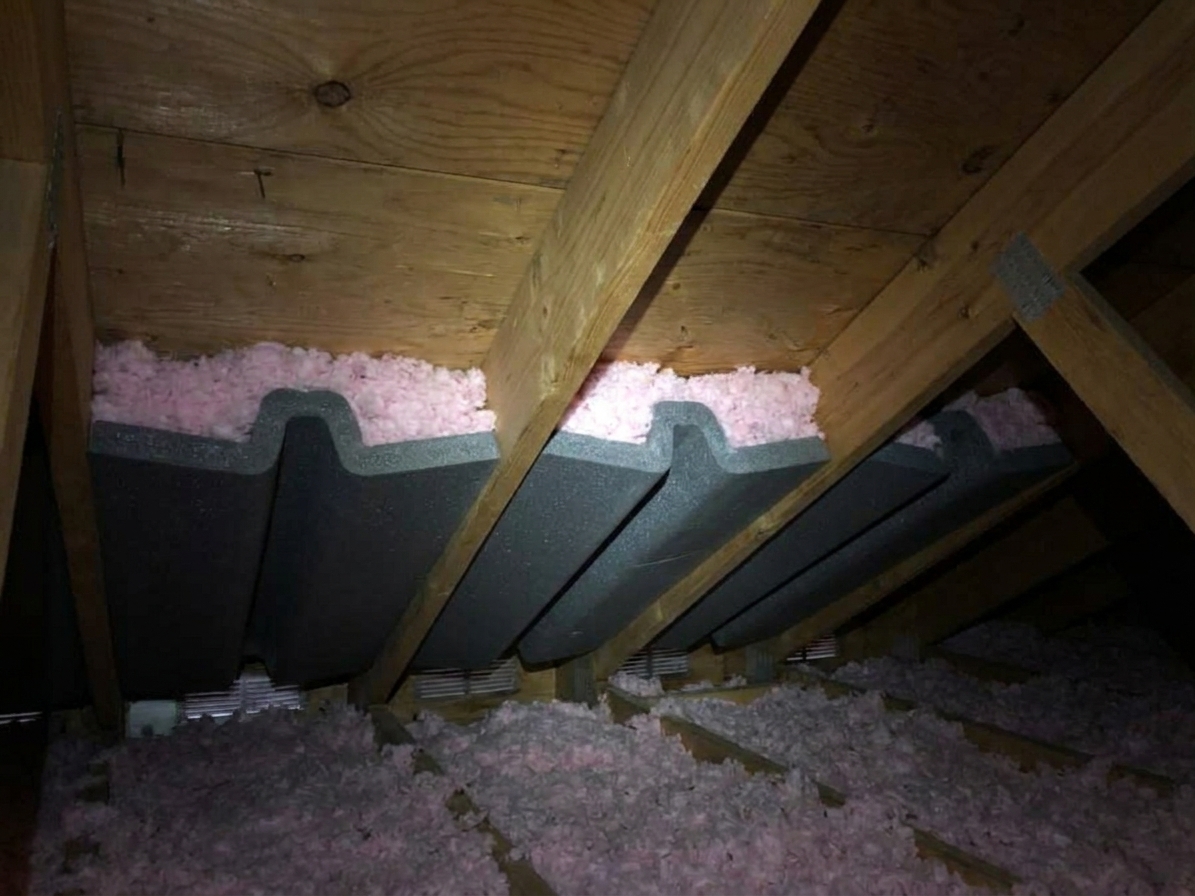
Also, if you are topping up near the eaves, use soffit baffles (vent chutes) so the new insulation does not block airflow from the soffits into the attic.
When to pause
I would be doing you a disservice if I did not mention the situations where you should pause before adding inches.
Pause and investigate if you see:
- Moisture (wet insulation, staining, frost in winter)
- Mold on roof sheathing
- Bathroom fan ducts dumping into the attic
- Knob-and-tube wiring (older homes)
- Vermin activity (droppings, tunnels, heavy nesting)
Insulation does not fix those problems. It can hide them and sometimes make them worse.
One more safety note for old houses: If you have active knob-and-tube wiring, insulating over it is often unsafe and may be prohibited unless the wiring is abandoned and an electrician confirms it is handled correctly.
And if you see vermiculite: it looks like small gray-brown pebbles or mica flakes. Treat it as a possible asbestos risk. Do not disturb it until you have it tested or get professional advice.
FAQ
Is 10 inches of attic insulation enough?
Sometimes, but often not. 10 inches of cellulose can land around R-32 to R-38, which may be acceptable in warmer zones. 10 inches of blown fiberglass is often only R-22 to R-30, which is low for Zones 4 through 8.
Is 12 inches enough?
12 inches of cellulose is often in the R-38 to R-46 range, which gets you close to common targets in mid-range climates and still short of the R-49 to R-60 goals in colder zones. 12 inches of blown fiberglass can land anywhere from the high 20s into the 30s depending on product and density.
Why does my neighbor have less insulation than me and lower bills?
Because insulation is only one piece of the puzzle. Air sealing, duct leakage, furnace efficiency, thermostat habits, sun exposure, and even how windy your lot is all matter. But in my experience, being under target in the attic is still one of the safest bets for comfort per dollar.
Does it matter if my attic is vented?
Yes. These targets assume a typical vented attic with insulation on the attic floor. If you have a conditioned attic or spray foam on the roofline, the strategy changes and so do the R-value goals.
The simplest way to decide
If you want the quick decision tree I use:
- Find your climate zone and pick a target (often R-49 in cold climates).
- Measure depth in several attic spots and record both the average and the minimum.
- Use the R-per-inch ranges above to estimate your current R (or use the bag chart if you can).
- If you are clearly below the target, you probably need more insulation on the attic floor.
If you tell me your climate zone, insulation type (cellulose or fiberglass), and the depths you measured (average and minimum), I can help you ballpark where you land and how far you are from the target.