Build a reliable starter tool kit with these 15 must-have hand tools for basic repairs and DIY projects, with simple buying tips from a former carpenter.
The Homeroom Fix
September 11, 2026
•
By Marcus Delgado
10 Essential Tools Every Homeowner Needs
Build a simple, reliable home toolkit with 10 essential tools for basic repairs, plus smart buying tips, safety notes, and easy storage ideas.
When something breaks at home, it almost never breaks politely. A cabinet hinge loosens five minutes before guests arrive, a picture frame starts leaning, or the toilet handle decides it is on strike.
The good news: you do not need a garage full of gadgets to handle the most common repairs. You need a small set of hand tools that actually work, live in the same place, and are easy to grab when life happens.

Below are my 10 essentials, what each one is for, and what I recommend buying so you do not end up with the bendy bargain-bin version that makes every job harder.
Before you buy anything
Start with common home problems
- Loose stuff: knobs, hinges, towel bars, outlet covers
- Small measuring jobs: curtains, shelves, furniture
- Minor patching: nail holes, tiny drywall dings
- Simple plumbing touch-ups: tightening a trap nut, swapping a supply line
- Opening and cutting: boxes, caulk tubes, weatherstripping, carpet edge
My “buy once” rule
If a tool has a hinge, a pivot, a blade, or a measuring scale, buy the solid version. You do not have to buy the fancy version. You just want one that feels sturdy in your hand and does not wobble like a shopping cart wheel.
1) Claw hammer (16 oz)
If I could hand every new homeowner just one tool, it would be a basic 16-ounce claw hammer. It drives nails, pulls nails, and persuades stuck things without you needing to resort to “creative” methods.
What you will use it for
- Hanging pictures and mirrors with nails or picture hooks
- Pulling out old trim nails or bent nails
- Small removal jobs, like popping off thin trim pieces (go slow and protect the wall)
What to buy
- 16 oz is the sweet spot for most homeowners
- Curved claw is the common all-around choice and works well for nail pulling using a rocking motion
- Straight claw is often preferred for prying and rougher work, and still pulls nails fine
- Fiberglass or steel handle with a comfortable grip is durable and low-maintenance

2) Tape measure (25 ft)
Measuring is one of those “do it right or do it twice” moments. A good tape measure makes every project calmer. A cheap one turns simple jobs into a wrestling match.
What you will use it for
- Measuring furniture and doorways before buying anything big
- Marking stud locations and shelf heights
- Quick layout for curtains, frames, and wall hooks
What to buy
- 25 ft is ideal for rooms and most around-the-house measuring
- Look for a tape with a stiff standout so it does not collapse immediately
- Clear markings and a solid lock button
3) Screwdriver set (or a quality multi-bit driver)
If a tool is going to earn its keep, it is a screwdriver. Most home repairs are basically “tighten the thing that got loose.”
What you will use it for
- Tightening cabinet hardware and door hinges
- Installing outlet and switch plates
- Assembling furniture without losing your sanity
What to buy
- You need Phillips #2 and flathead at minimum
- A multi-bit driver is great if the handle is comfortable and the bits fit tightly
- Magnetic tip is helpful, especially overhead
Pro tip: If screws keep loosening in a door hinge, the tool is not the fix. The fix is usually a longer screw that bites into the stud behind the jamb.
Quick safety note: For outlets and switches, turn off the breaker and verify power is off before you touch anything inside the box.

4) Adjustable wrench (8 inch)
An adjustable wrench is the homeowner’s “fits most things” tool for nuts and bolts. It is not a replacement for a full wrench set, but it handles a surprising amount.
What you will use it for
- Tightening faucet supply line nuts
- Minor plumbing fittings and small appliance hookups
- Assembling items with bolts, like bike racks or furniture
What to buy
- 8 inch works for most household sizes and spaces
- Choose one with a smooth adjustment wheel and minimal jaw wobble
Quick safety note: When possible, pull the wrench toward you instead of pushing away. If it slips, your knuckles will thank you. If you have to push because of clearance, slow down and keep your other hand out of the line of fire.
5) Tongue-and-groove pliers (10 inch)
If you do even a little plumbing, these are the pliers that make you feel like you know what you are doing. Tongue-and-groove pliers (often called Channellock-style) grab larger fittings securely and adjust fast.
What you will use them for
- Tightening or loosening trap nuts and larger plumbing fittings (use a rag to reduce scratches)
- Gripping stubborn caps and couplings
- Holding one part steady while you turn another
What to buy
- 10 inch is the most useful all-around size
- Look for jaws that align well and a pivot that feels solid

6) Needle-nose pliers
Needle-nose pliers do the jobs your fingers cannot, especially in tight spaces. If you have ever tried to fish a dropped screw out of a heat register, you already understand the value here.
What you will use them for
- Bending or holding small wires and hooks
- Grabbing a screw or nut in a cramped space
- Pulling small cotter pins or clips
What to buy
- 6 inch is a great all-around size
- Important: “Insulated grips” are mostly about comfort. If you plan to do any electrical work, look for tools that are VDE/1000V-rated and still shut off power at the breaker and verify before touching anything.
7) Utility knife (with extra blades)
A sharp utility knife beats a dull one every single time. It is cleaner, safer, and less likely to skid and bite something you care about.
What you will use it for
- Opening packages and breaking down cardboard
- Trimming caulk, weatherstripping, or carpet edges
- Scoring drywall paper for a small patch
What to buy
- A sturdy folding or fixed utility knife with a secure blade lock
- Keep a small pack of blades in the same box as the knife
Safety habit: Cut away from your body and retract the blade the moment you are done. Future-you will appreciate it.
8) Torpedo level (9 inch)
A torpedo level is small, affordable, and keeps your “quick projects” from looking like quick projects. It is perfect for pictures, shelves, towel bars, and anything that needs to look intentional.
What you will use it for
- Hanging frames, curtain rods, and floating shelves
- Leveling small appliances or furniture that wobbles
- Checking if something is actually crooked or if your eyes are just tired
What to buy
- Look for easy-to-read bubbles and a solid body
- A magnetic edge is handy if you work around metal, but not required

9) Putty knife (2 inch)
This is the quiet MVP of basic repairs. A simple 2-inch putty knife handles spackle, scraping, and a dozen odd jobs where you need a stiff, flat edge.
What you will use it for
- Filling nail holes and small dents in drywall
- Scraping old caulk or loose paint
- Prying gently behind trim or removing switch plates without chewing up the wall paint
What to buy
- A flexible steel blade is great for spackle
- If you can, also add a stiffer one later for scraping, but start with one good 2-inch knife
10) Stud finder (basic, with AC warning)
Yes, this one is not as “hand tool” as a hammer, but it is essential for safe, solid wall mounting. If you plan to hang anything heavier than a small frame, finding studs turns “hope and drywall anchors” into “that is not going anywhere.”
What you will use it for
- Mounting shelves, TV brackets, and heavy mirrors
- Locating safer paths before drilling into a wall
- Reducing the odds of hitting wiring
What to buy
- A simple stud finder with an AC warning feature
- Skip the gimmicks, focus on consistent readings
Reality check: Stud finders are helpful, not magical. The AC warning feature can be inconsistent and should never be treated as a guarantee. Confirm with a small test hole, careful measurements, and common stud spacing, and use proper electrical safety whenever you are near wiring.
Helpful add-ons
I kept the main list tight, but these cheap add-ons save a lot of frustration:
- Flashlight or headlamp: for under-sink leaks, dark corners, and power outages
- Hex key set (Allen keys): for furniture, fixtures, towel bars, and door handles
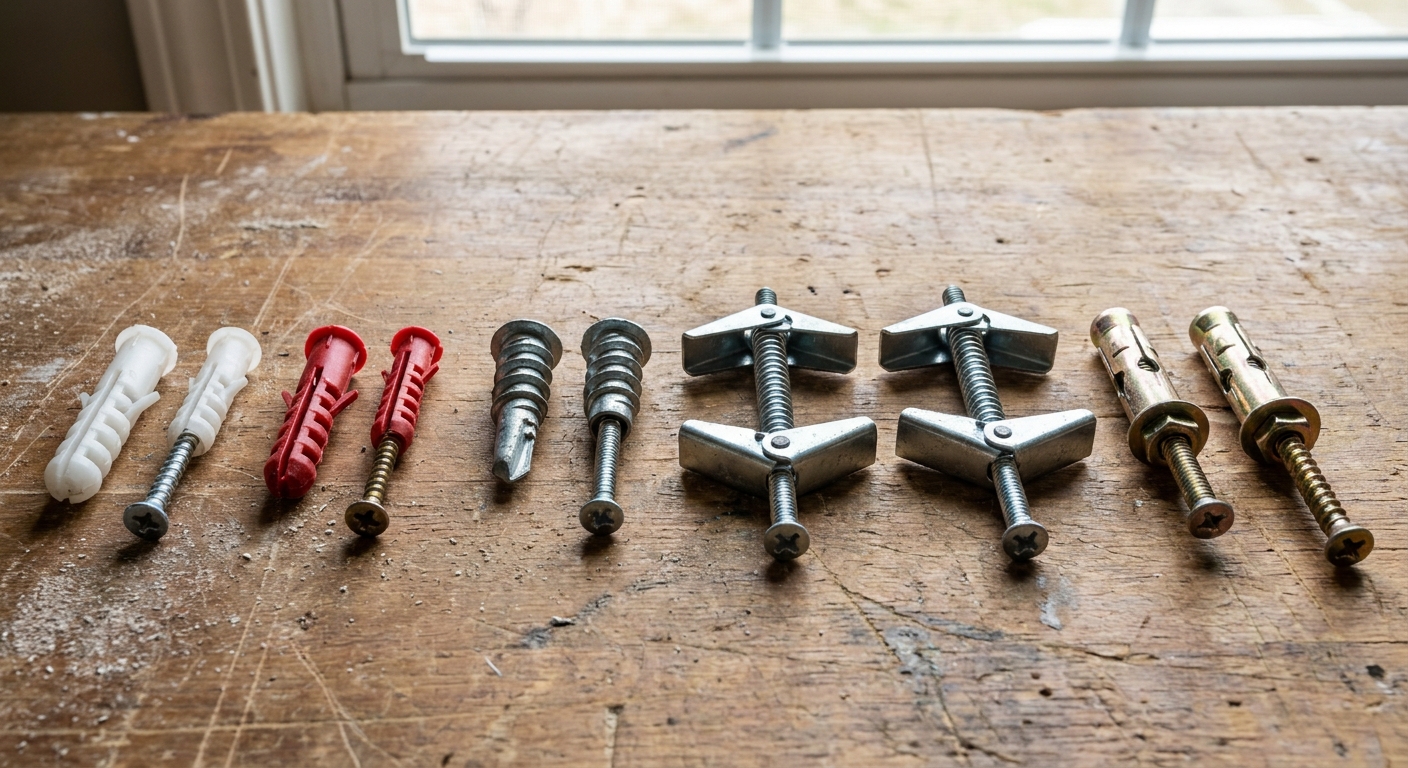
- Assorted screws and wall anchors: keep a small organizer with common sizes
- Pencil or marker: for marking measurements and stud locations
- Safety glasses: if you only wear them once a year, that is still worth it
Tool storage
The best toolkit is the one you can find in 30 seconds.
- One home base: a small tool bag or plastic toolbox in a closet or mudroom
- Keep it together: do not scatter tools between the kitchen drawer, the basement, and the trunk of your car
- Restock fast: if you use the last utility blade or anchor, add it to your shopping list that day

FAQ
Do I need a full tool kit set?
Not necessarily. Many big kits include filler tools you will never touch. If you find a kit with solid basics at a fair price, go for it. Otherwise, building your own small set usually gets you better quality per dollar.
What should I buy first if I am starting from zero?
A screwdriver (or multi-bit driver) and a tape measure will solve the most day-to-day problems. Add a hammer next.
Should I buy cheap tools to start?
Buy affordable, not flimsy. A decent hammer, tape measure, and screwdriver will last years and make learning DIY less frustrating. The cheapest versions often slip, strip screws, and break right when you need them.
What about a drill?
A drill is incredibly useful, but it is power equipment and a little outside today’s hand-tool list. If you plan to do more than the occasional repair, a basic cordless drill and bit set is a fantastic next step.
Wrap-up
If you keep these 10 tools in one easy-to-grab box, you will be ready for most basic repairs that pop up in a normal home. And if you mess up a little along the way, welcome to DIY. That is how the rest of us learned too.
Next time something rattles, drips, or loosens, you will not be thinking “Who do I call?” You will be thinking “Where did I put my toolbox?” and that is a good feeling.