
A homeowner-friendly guide to drywall anchors: realistic weight limits (shear vs tension), leverage warnings, when not to use anchors, and step-by-step insta...
The Homeroom Fix
September 22, 2026
•
By Marcus Delgado
Choosing the Right Drywall Anchor
Learn the main drywall anchor types, what they’re good for, and how to pick the right one for hollow drywall, studs, and tile so shelves, art, and fixtures stay put.

Marcus Delgado
Marcus Delgado is a former residential carpenter and lifelong DIY enthusiast who believes every homeowner has the power to transform their space. After a decade of swinging hammers for general contractors, he shifted gears to share practical, budget-friendly home improvement advice. When he's not renovating his own 1970s fixer-upper, you can find him hunting for salvaged wood or teaching weekend workshop classes.
If you have ever hung something “securely,” stepped back to admire your work, and then heard that awful thunk 20 minutes later, you are not alone. Most anchor failures come down to a mismatch between the anchor, the wall, and the real-world forces on the fastener. Common culprits include the wrong anchor type, the wrong wall material, a load that is heavier (or more dynamic) than expected, and simple install issues like the wrong hole size or over-tightening.
Let’s fix that. Below is a straightforward breakdown of the most common anchor styles, what they are actually designed to do, and how to match them to hollow drywall , studs, and tile without turning your wall into Swiss cheese.
Quick safety note: Always follow the manufacturer’s instructions and weight ratings for your specific anchor and hardware, especially for shelves, TVs, and anything installed over a bed or seating. Also avoid drilling anywhere plumbing or electrical may run. When in doubt, stop and verify.
Quick rule
If you can hit a stud, do it. A properly sized screw into solid framing is usually the strongest, most long-term reliable option. That said, a high-quality toggle in good drywall can outperform a small screw with minimal bite, so aim for solid embedment and the right fastener for the job.
Know your wall
Hollow drywall is gypsum board over open space. It is great for light loads, but it crumbles if you over-tighten and it tears if the load pulls straight out.
Studs are wood or metal framing behind drywall. Wood studs hold screws well. Metal studs are thinner and easier to strip, so they often need toggles or specialty anchors sooner than people expect.
Tile is a hard surface over backer board or drywall. Tile is the fragile part. Your anchor choice matters, but drilling technique matters even more.
Drywall thickness matters: Most walls are 1/2 inch drywall, some are 5/8 inch (common on ceilings and for fire rating). Thicker drywall can increase holding power slightly, but it also changes which molly or toggle length will open and clamp correctly behind the wall.
Anchor types
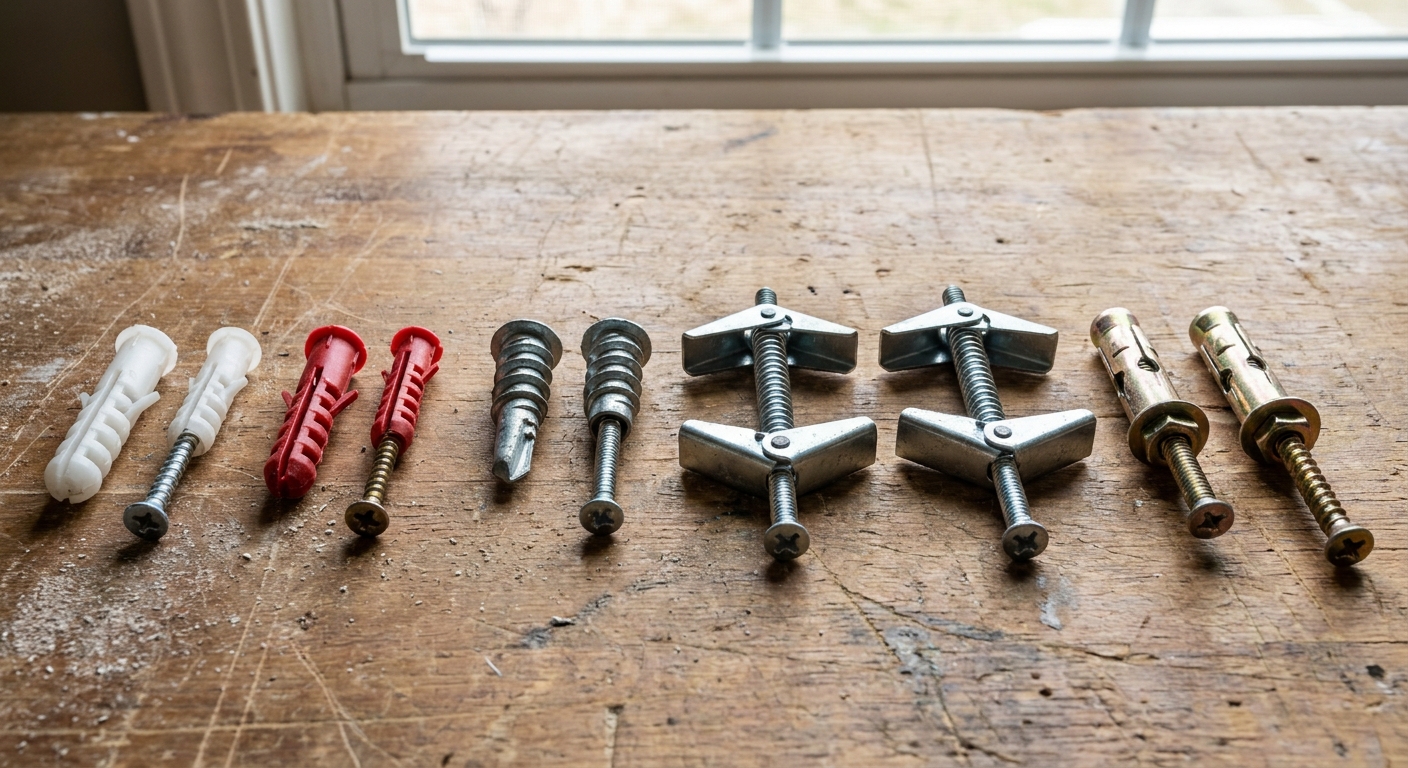
Plastic expansion anchors
Best for: light loads in drywall when the anchor is rated for drywall and the load is mostly straight down.
How they work: the plastic sleeve expands as you drive the screw, creating friction in the hole.
Use when: hanging small frames, light hooks, and low-stress items.
Avoid when: anything that will be tugged on, bumped, or leveraged outward (coat hooks, towel bars, floating shelves). They are a common “thunk” culprit, especially when a generic masonry-style plastic plug is used in drywall.
Self-drilling drywall anchors (metal or heavy plastic)
Best for: medium loads in hollow drywall when you cannot hit a stud.
How they work: a wide-thread anchor bites into the drywall face. The screw expands it or locks into it.
Use when: curtain rod brackets with light curtains, larger frames, small wall-mounted accessories.
Tips: stop as soon as the flange is snug. Over-driving chews the drywall and weakens the hold. Match the screw length and diameter to the anchor. A mismatched screw can strip the anchor or prevent it from expanding correctly.
Molly bolts (hollow wall anchors)
Best for: medium-to-heavier loads in hollow drywall where you want a more secure, spread-out grip.
How they work: the sleeve expands behind the drywall into “legs” that clamp the back side.
Use when: towel bars, toilet paper holders, heavier decor, and hardware that gets used daily.
Tips: choose a length that matches your drywall thickness so the anchor opens fully behind the wall. Tighten until snug, not until you feel like you are “making it safe.”
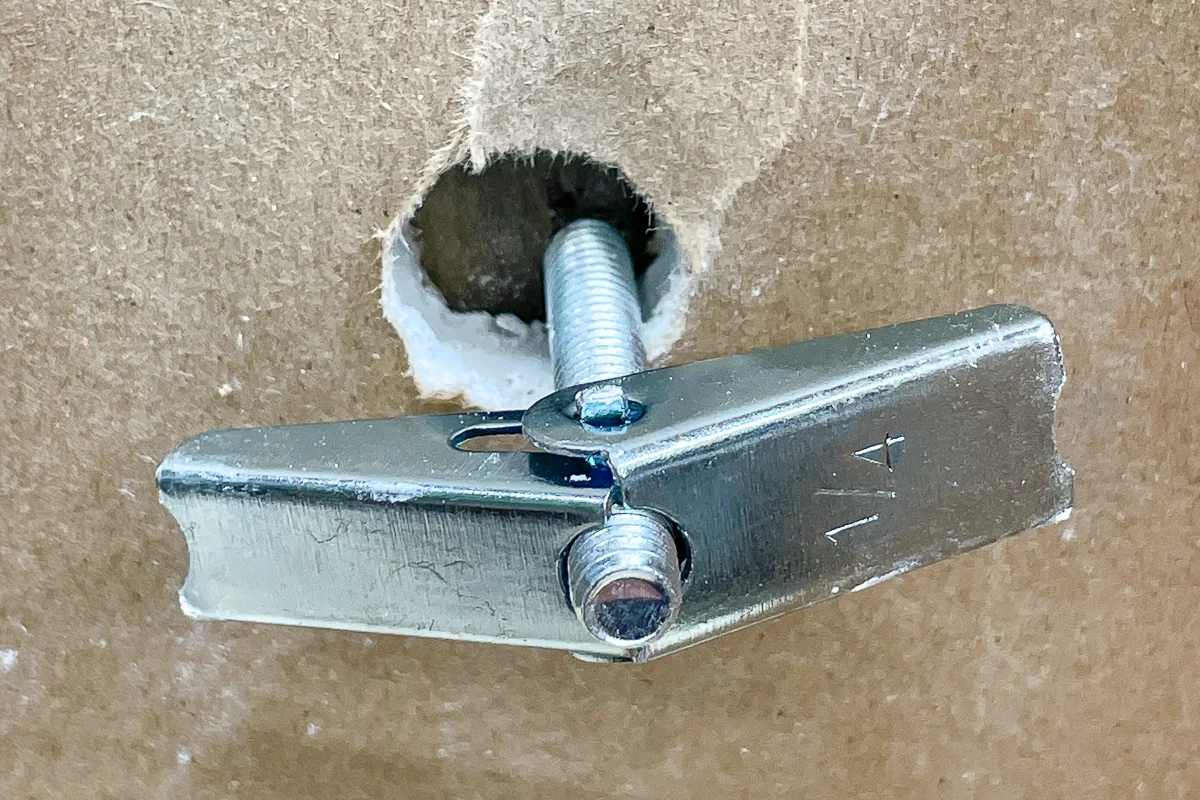
Toggle bolts (spring toggle or strap toggle)
Best for: heavy loads in hollow drywall and questionable walls where you need the widest grip.
How they work: a toggle flips open behind the drywall and spreads the load over a large area.
Use when: shelves, large mirrors, and anything you do not want to re-hang. For TVs, follow the mount manufacturer’s requirements. Many mounts require studs, or a very specific number and type of rated toggles, because leverage and dynamic loads matter.
Tradeoff: they require a larger hole. Strap toggles are easier to install and often easier to remove than spring toggles.
Best choice by surface
Hollow drywall
- Light items: plastic anchors rated for drywall, or small self-drilling anchors.
- Medium items: self-drilling anchors or molly bolts.
- Heavy items or anything that will be pulled on: toggle bolts or strap toggles.
Common mistake: using a light-duty plastic anchor for a hook that gets yanked. The anchor holds until the drywall paper tears, then it drops.
Studs
- Wood stud: use a wood screw of the right length. Predrill if the screw is thick, you are near the edge of the stud, or the wood is old and prone to splitting.
- Metal stud: for very light loads, self-drilling sheet-metal screws can work, but they can also strip in thin-gauge studs. For many real-world items (towel bars, grab-prone hooks, shelves), a toggle style fastener or a specialty metal-stud anchor is often the safer choice.
Tips: for a standard wall, you usually want at least 1 inch of screw bite into a wood stud after accounting for drywall thickness. If you only catch the stud edge, strength drops fast.
Tile
Best for: mounting into the framing behind the tile when possible. If there is no stud, use anchors rated for tile and the load, and confirm there is a cavity behind the backer board for a toggle to open.
- Into a stud behind tile: drill through tile carefully, then use a wood screw into the stud.
- No stud available: use a toggle bolt through the backer board (only if there is open space behind it), or a high-quality anchor specifically rated for tile and backer board.
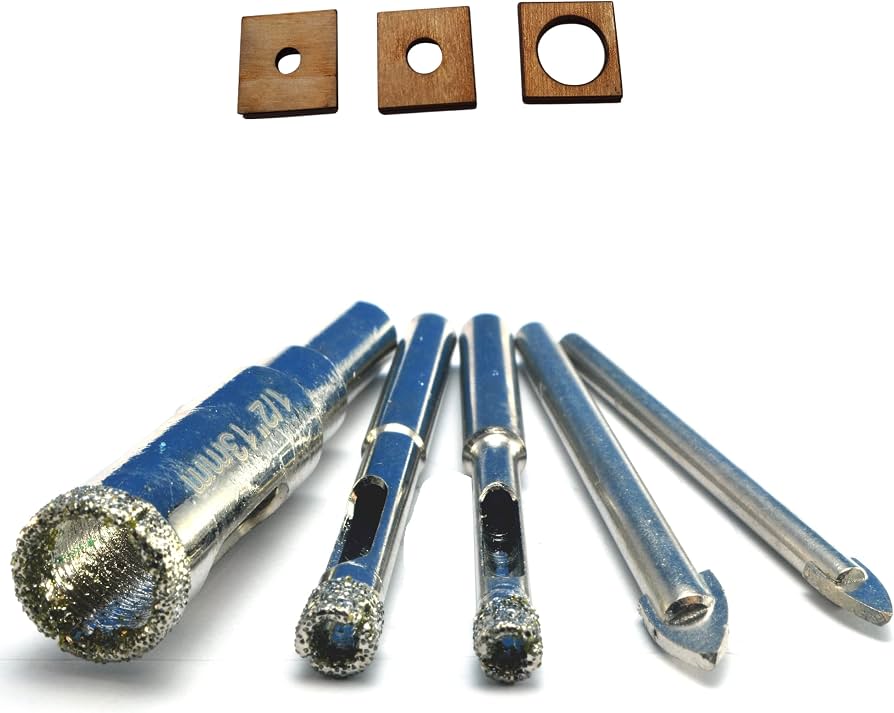
Tile drilling basics: use a carbide or diamond tile bit, keep it cool, and start slow. Avoid drilling in line with tile edges if you can. Before you drill, verify you are not in a spot where plumbing or electrical is likely to run.
Simple pick list
- Can you hit a stud? Use a screw into the stud.
- No stud and it is light? Plastic anchor rated for drywall, or a small self-drilling anchor.
- No stud and it is used daily? Molly bolt (or a toggle if it will be pulled on).
- No stud and it is heavy or risky to drop? Toggle bolt or strap toggle.
- Tile surface? Aim for a stud. If you cannot, confirm you have a cavity and use a rated toggle through the backer board, and drill the tile carefully.
Common failures
- Over-tightening: strips the hole and turns a “rated” anchor into a loose plug.
- Wrong hole size: too small can crush drywall or distort the anchor; too big leaves nothing for it to grip.
- Wrong direction of force: some setups hold better in shear (weight sliding down the wall) than in pull-out (force yanking straight out from the wall).
- Wrong screw for the anchor: the anchor may not expand, may split, or may strip out early.
- Bad drywall: water-damaged, crumbly, or over-painted drywall can fail even with a decent anchor.
- Ignoring leverage: shelves and brackets can multiply force on the fasteners, even if the item is not that heavy.
If you are ever unsure, go up a class and follow the packaging ratings and install steps. A slightly larger toggle is usually cheaper than repairing a torn-out drywall crater.


